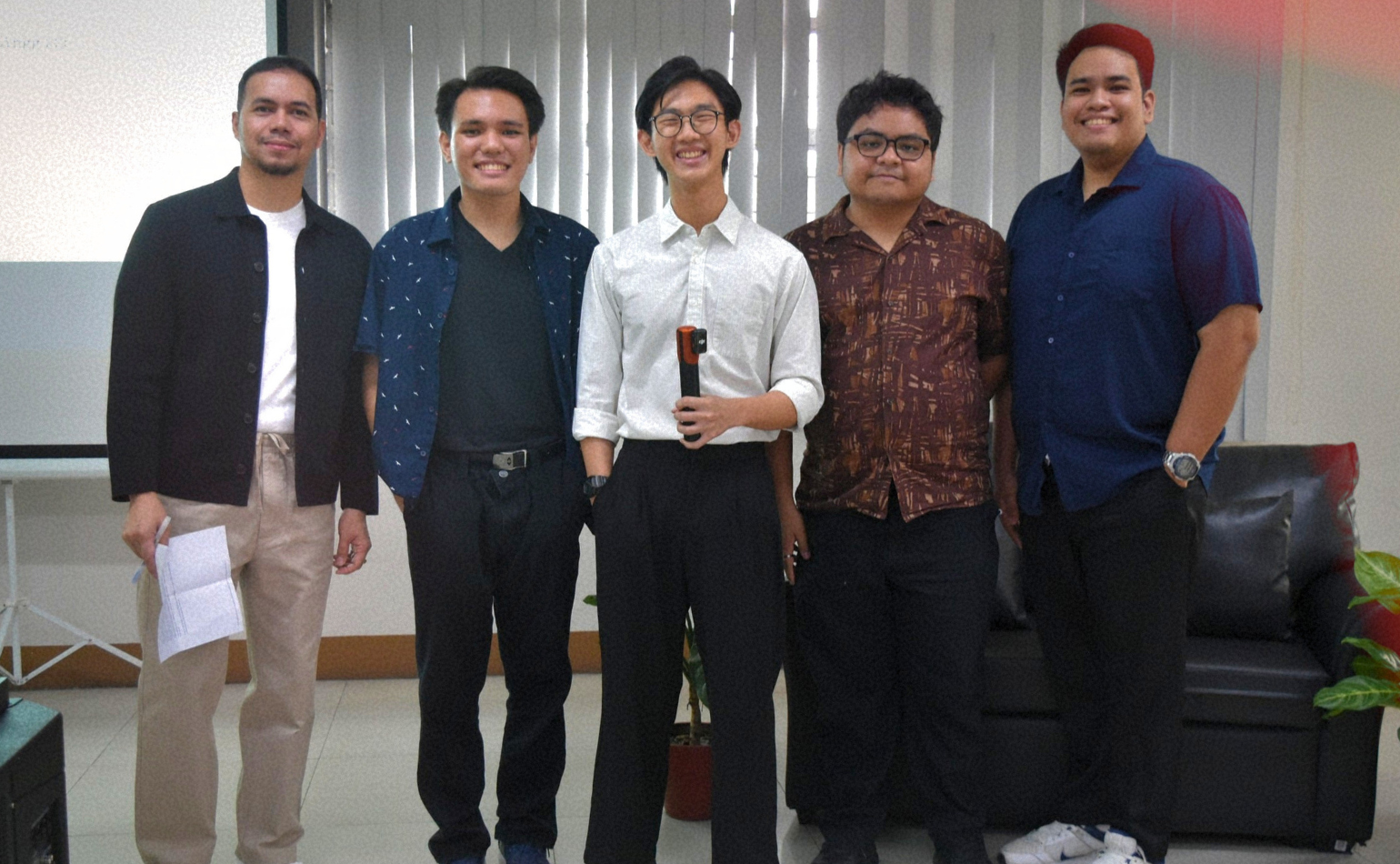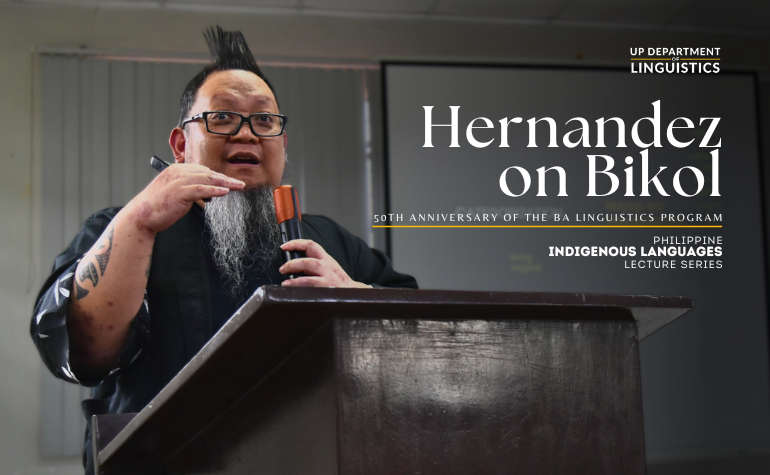
As the final installment of the 2025 Philippine Indigenous Languages Lecture Series (PILLS) and in celebration of the 50th anniversary of the BA Linguistics program at the Department, Assoc. Prof. Jesus Federico C. Hernandez presented a lecture on the macrolanguage Bikol (ISO 639-3 [bik]) last 5 December 2025 at the CSSP Health & Wellness Center. His lecture, entitled “Bikol [bik]: Not necessarily angry,” examined a set of Bikol expressions often labeled as an “angry register” and argued that this characterization is both inaccurate and overly reductive.
The lecture was prompted by a recent viral reel by @etymolognerd, which popularized the idea that Bikol has an “angry register,” citing earlier linguistic work commonly attributed to Jason Lobel’s The Angry Register of the Bikol Languages of the Philippines. In this reel, the register was described as (a) unique to Bikol and (b) defined primarily by the speaker’s emotional state. First, Hernandez recognized that we have only scratched the surface with regard to describing the Philippine languages, so it is too early to assume that the Bikol “angry register” is exceptional. He also noted that similar phenomena have been reported in other Philippine languages, including Mongondow and several Eastern Manobo languages. Second, he discussed how the term “angry register” itself has circulated in the literature. While Lobel is often cited in connection with the concept, the description is sometimes traced back to Malcolm Mintz’ Bikol Dictionary and even to earlier lexical sources, such as Marcos de Lisboa’s Vocabulario de la Lengua Bicol, which contains notes on Bikol terms associated with anger.
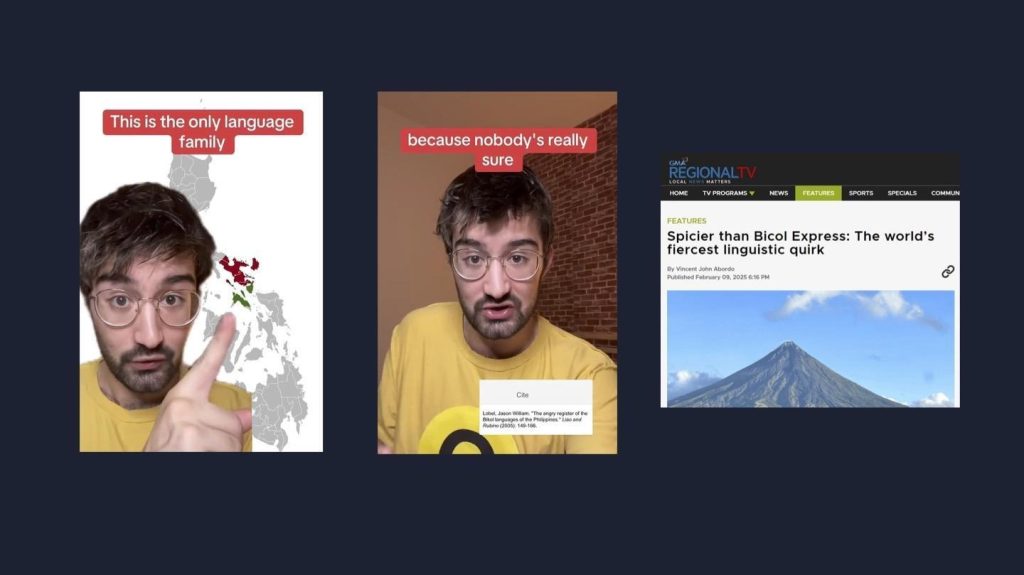
However, Hernandez emphasized that calling this phenomenon an “angry register” is a misnomer, as it collapses a wide range of social meanings into a single emotion. As an alternative, he introduced the native Bikol term rapsák, glossed broadly as ‘vulgarity in words.’ The rapsák vocabulary has been previously discussed in the work of Leonor Dy-Liacco, who explicitly warned against the use of rapsák terms, defining them as mangirí ‘repulsive,’ maati ‘dirty,’ bastos ‘indecent,’ garapal ‘coarse,’ and kulang nin kabinian ‘lacking in refinement’. These descriptions, Hernandez argued, reveal not linguistic facts per se but social beliefs about what counts as “beautiful,” “proper,” or “refined” language.
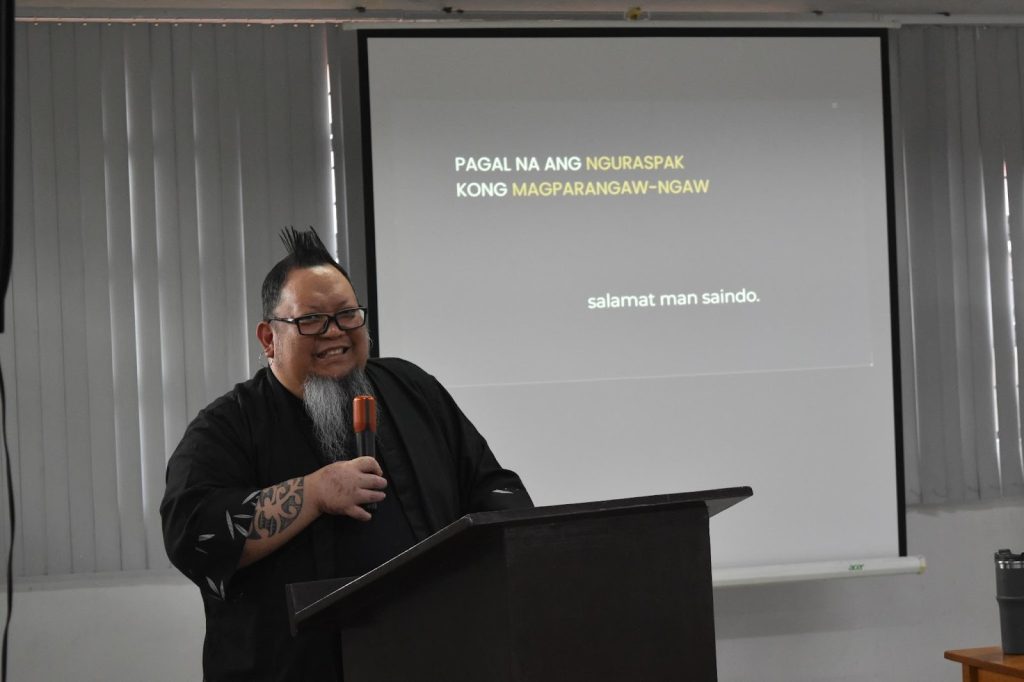
Hernandez also gave a personal touch to his lecture, sharing how rapsák was used in his everyday life as a Bicolano. As a native speaker, he was proficient in rapsák and would use it freely with his mother, often in witty and playful ways. To him, rapsák did not necessarily evoke anger or scolding but served as a form of endearment, a marker of intimacy, and a shared mode of communication uniquely reserved for him. This experience underscored his central claim that rapsák is not inherently angry, but context-dependent and socially meaningful.
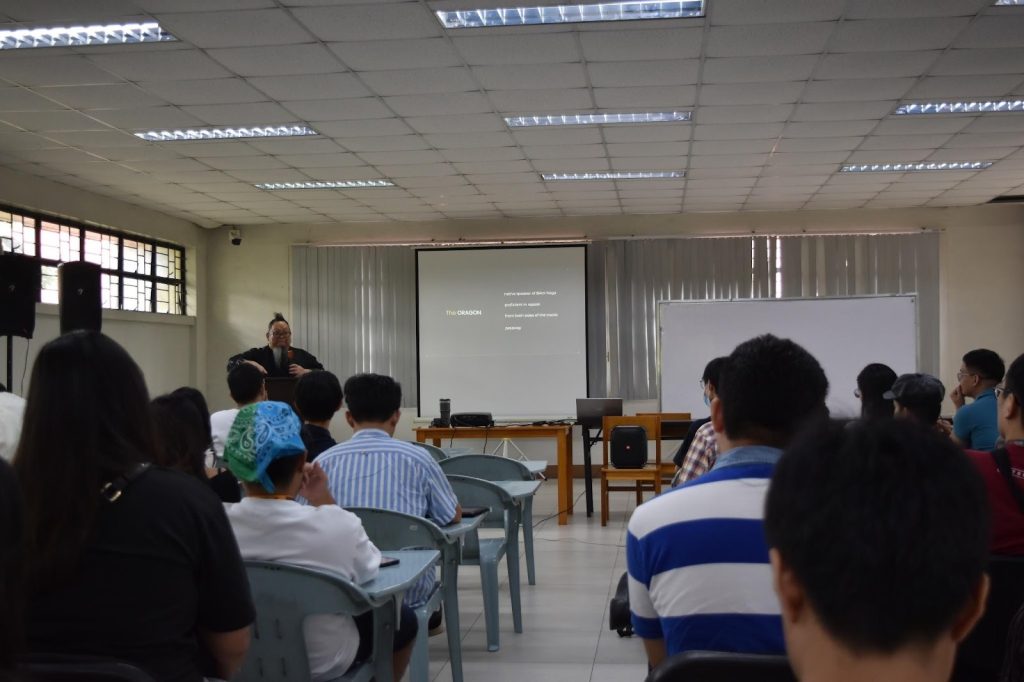
The latter part of the lecture situated rapsák within a broader discussion of linguistic variation. Hernandez emphasized that language has no single form, and that variation may be geographic, social, or personal. Speakers constantly shift across different varieties depending on the interlocutor, setting, topic, and activity, drawing on what he referred to as their linguistic repertoire. Within this repertoire, so-called “vulgar” forms coexist with formal, classical, clerical, and institutional varieties. Rapsák, in this sense, belongs to the language of the common people and serves multiple functions: expressing intense emotion (including, but not limited to, anger), enabling linguistic creativity, and providing a space for identity.
Hernandez further argued that rapsák taps into social taboos and therefore has the power to challenge norms and standards of linguistic purity; it is a kind of social rebellion.
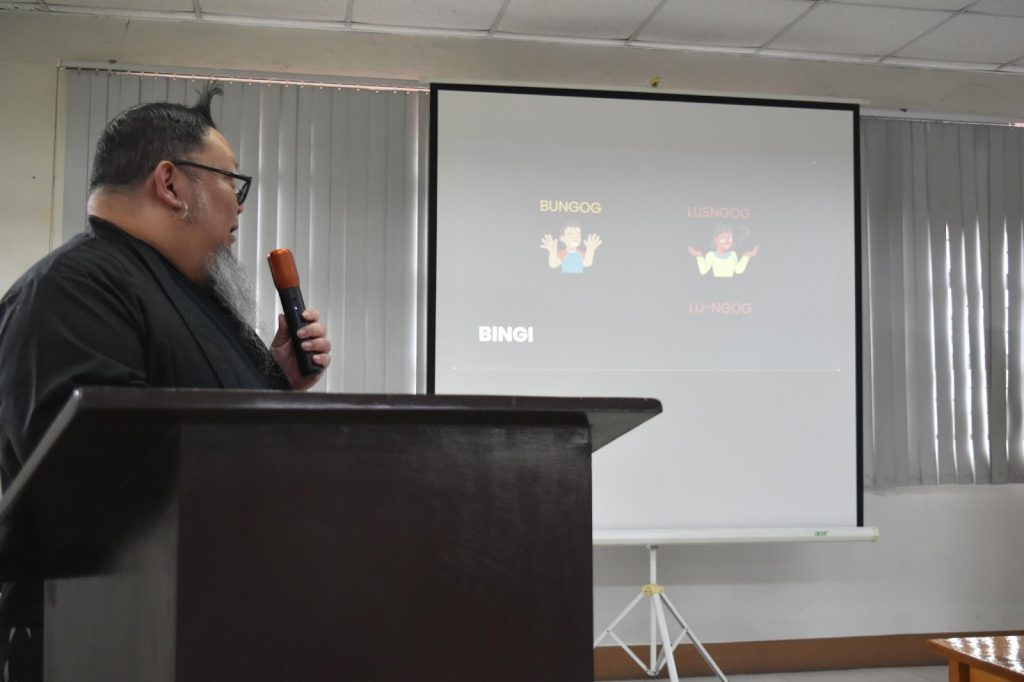
The lecture also presented an inventory of what Hernandez called “rapsák alphabetics,” demonstrating that rapsák words do not belong to a single semantic domain or grammatical class. Instead, they draw from multiple sources: animal metaphors, othering strategies, lexical innovations, and near-onomatopoeic devices. Taken together, rapsák was described as the convergence of multiple linguistic “others”—elements excluded from what is considered elegant or standard Bikol—making it difficult to trace to a single origin.

During the open forum that immediately followed, attendees raised questions about the rules and social factors governing the use of rapsák. The discussion reinforced the lecture’s central message: that rapsák must be understood as a complex, socially embedded dimension of Bikol linguistic practice.
The recording of Hernandez’s lecture is now available on the Department’s official YouTube channel. Hernandez’ lecture concludes the 12 installments of PILLS from Bantayanon to Bikol. The roundup from the 2019 PILLS to its 2025 installments can now also be viewed on Youtube. Thank you and see you soon for next season of PILLS!
Published by Katrina Joyce S. Jose