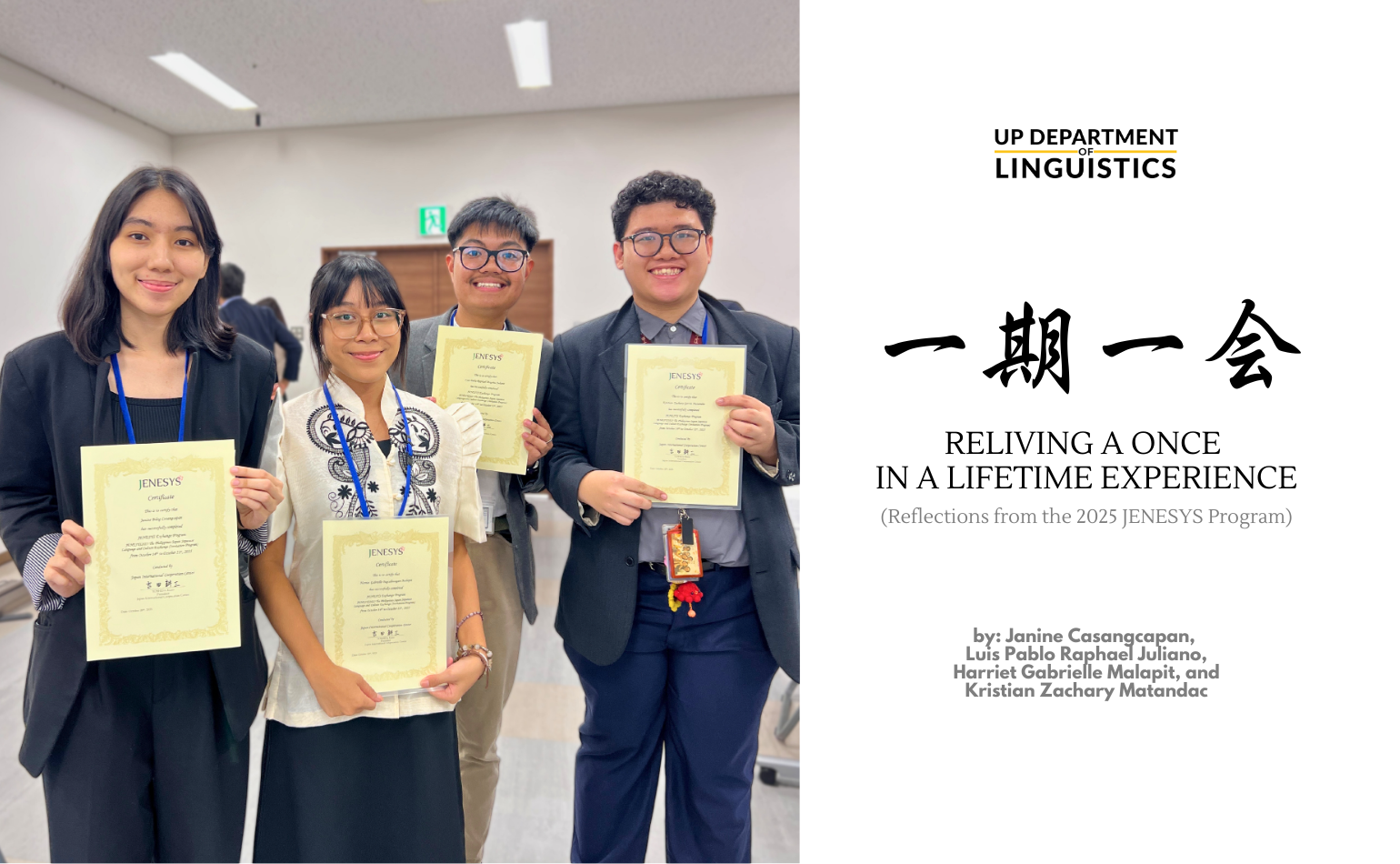
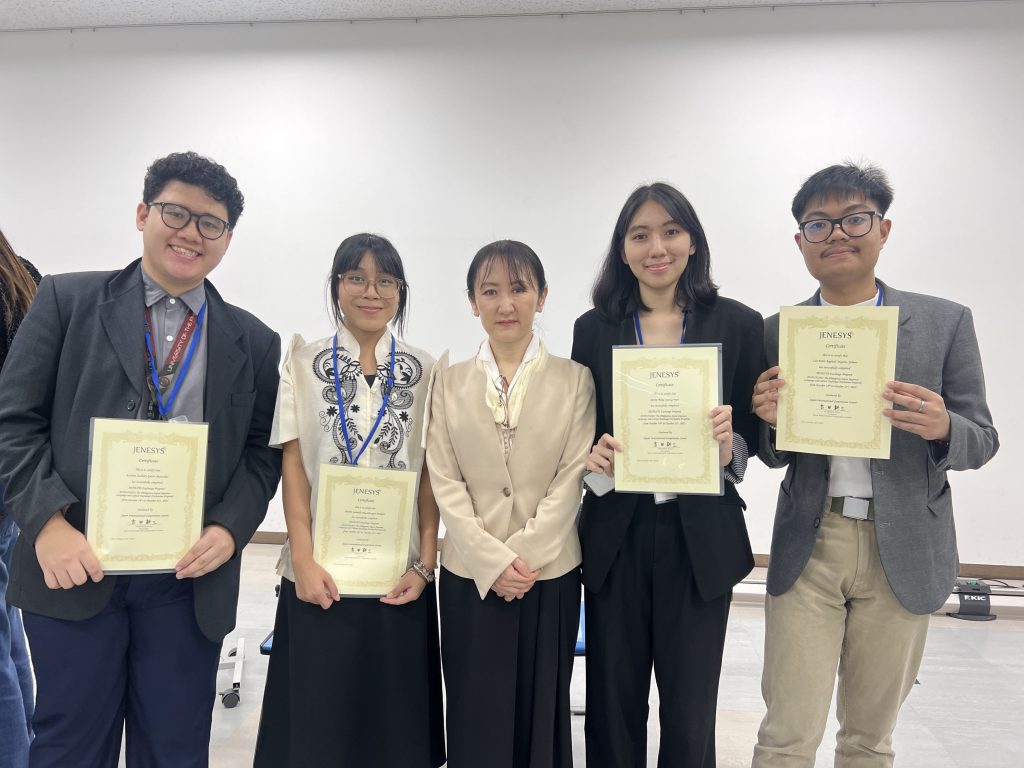
BA Lingg students Janine Casangcapan, Luis Pablo Raphael Juliano, Harriet Gabrielle Malapit, and Kristian Zachary Matandac were chosen to be part of the 2025 JENESYS Program by the Japan International Cooperation Center (JICE). Read on as they reflect on their experiences of the program and as they relive the memories they had with their host families and newfound friends.
A Dream Coming to Life
“Maganda diyan sa Japan.” Our families have probably said this at least once when Japan gets mentioned on the news or on social media, then proceeding to compare life in Japan to that in the Philippines, sometimes leaving us to wonder how living there would turn out. For some of us, that very dream of visiting, working, or living in Japan is what pushed us to study linguistics in the first place; it is what continues to give us the drive to power through the hardships we go through every semester.
As learners of Japanese, the four of us have developed our own images of Japan through the media and materials we’ve consumed. Whether they’re from our favorite anime or manga series, music, Japan-inspired games, or even maybe from international news, we’ve all been introduced to the Japanese culture and lifestyle one way or another. That’s how the dream usually starts, right? We see people eating Japanese food with spoons and forks; we watch snippets of life in Japan on international news at the same time as issues of widespread corruption become featured on our local newspapers and radio stations; we listen to our favorite Japanese artists while we’re stuck in the Katipunan traffic, sighing as the dream begins to seem more and more distant as the days pass.
But to our surprise, on the most normal of days came a sign that everything might not be as impossible as it seems. News came forth from the department that the Japan International Cooperation Center (JICE) is looking for participants for the 2025 JENESYS Program, and that we’ve been chosen to go on an all-expenses paid trip to Japan. Just like that, the biggest hurdle to traveling had suddenly vanished, and once you climb that highest wall, all the other obstacles become a little easier to overcome.
For some of us, this opportunity was a surprise that came from a mile away; a way to finally apply all the Japanese that we’ve been learning in university; a chance to seek out pleasures of the heart and live out moments that had only manifested in our thoughts. But to all of us, regardless of our first thoughts about the trip, we knew that we shared a deep love and interest for Japanese culture, a love that runs deep enough to convince ourselves to take this chance, thinking that maybe, when we get home from this trip, albeit short, it can be our turn to say “Ang ganda nga sa Japan.”
Learnings
An activity that was very close to home for us was the lecture in Yokohama National University where the delegates and the university’s students got to exchange about onomatopoeia, superstition-based expressions, and writing systems of Burmese, Tagalog, and Japanese. It was an exercise in cultural relativism (a foundational trait of our descriptivist lens in studying languages and their structure) as we got to observe not only the parallels but also the striking differences between our countries’ cultures, an example being how black cats are perceived across the three (unlucky in the Philippines and Myanmar, lucky in Japan).
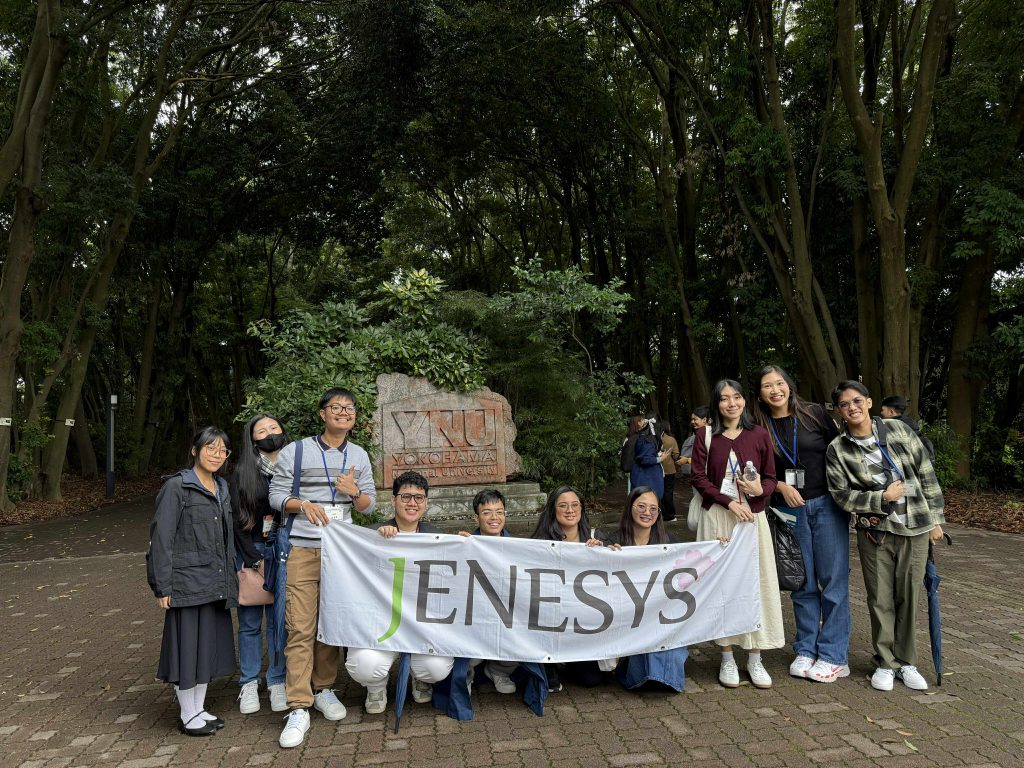
Apart from the lecture, we also learned cultural norms throughout the program such as the importance of punctuality (given that even a moment’s delay could make us miss the day’s activities) as well as the emphasis on politeness, not only in interacting with JICE staff and fellow delegates but also with the locals. We also got to witness in action the collectivism that drives Japanese society, in which even observing the behavior of the locals would enable you to adapt to situations which you would otherwise normally ask for help. On the topic of Japanese society, we also got to hear from our host families different perspectives on life in the country, both the good and the bad. An eyeopening problem that I learned in particular was why part-time jobs are still typical even for residents of old age. It ties in to the unfortunate problem of Japan’s rising cost of living alongside challenges with getting welfare and pension adequately and on time (especially if one is a widow or unmarried).A linguistic concept that piqued our interest in particular during the program was how morphological constructions in Japanese are innovated by its speech varieties. One was discussed in the aforementioned lecture about the sociolect of young Japanese people ages 16-20. For instance, verbs with borrowings from foreign languages are constructed by clipping its final mora or both penultimate and final morae then adding the suffix る ru as opposed to the expected addition of する suru (e.g. メモる memoru “to note”、ググる guguru “to Google”). They also observed a similar construction in adjectives for their native lexicon, where the addition of い i to clipped forms of borrowings (e.g. エモい emoi “emotional”、 ゲロい “grotesque”) have also influenced い形容詞 i-keiyoushi “i-adjectives” (e.g. ハズい hazui from clipping 恥ずかしい hazukashii “embarrassing”). Interestingly, they mentioned that the reason behind such formations is still unknown to them, making it a research gap that can potentially be discussed in future studies.

Another was during the homestay which was also a moment of observation for us as we got to hear the speech variety used by residents of Gifu and its parallels to the Kansai dialect such the negating suffix へん hen for the standardized ない nai. We were also taught some of the greetings and expressions they use such as おおきに ookini “thank you” and そらー soraa for pointing at an object.
Reflection
It almost feels like it was just yesterday when we boarded the plane—excited for whatever the JENESYS 2025 Language and Culture Exchange Program in Japan had in store for us. Now that we’re back home, all we’re left with are memories to share.
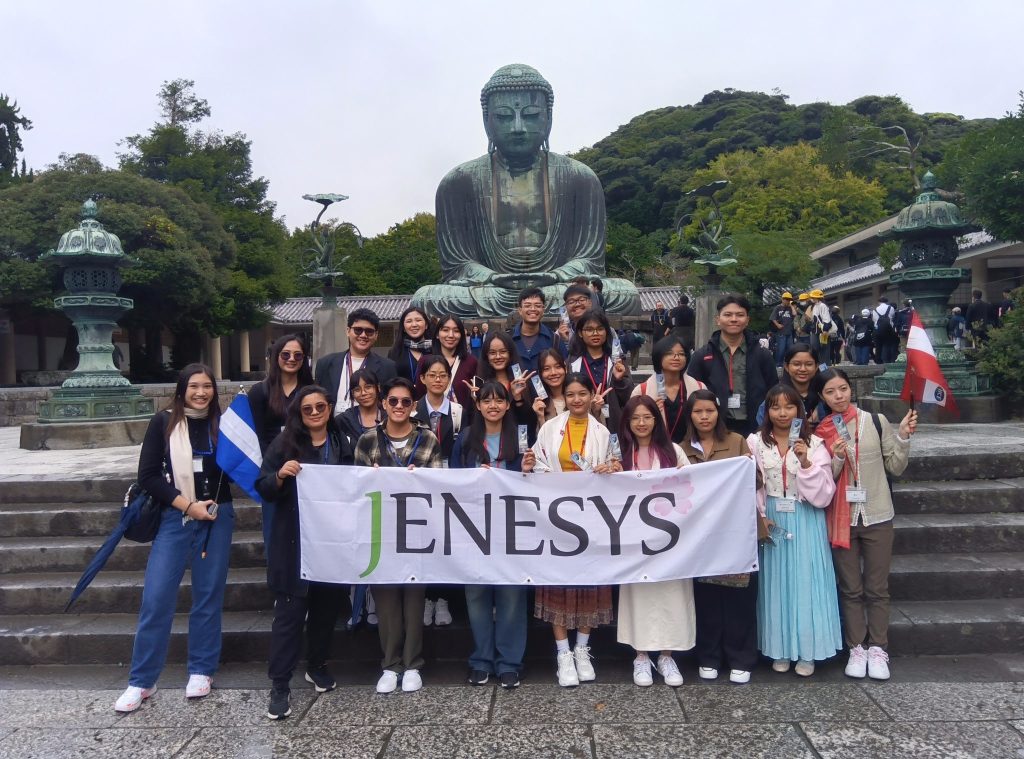
Exploring Japan for the first time was one of the most memorable experiences of our lives. In just eight days, we were able to do so much more than we ever expected. It amazes us how full each day felt. We felt inspired, bewildered, enchanted, and fascinated all at once. Our trips to different places like Tokyo, Kamakura, Yokohama, Akihabara, Gifu, Nagoya, and Asakusa each left its own mark on us—whether it was a quick stroll through streets, city quests, university visits, or a deep dive into the culture.
Tokyo was a shock—tall buildings, bright lights, crowds everywhere, and amazing architecture. Being there made us realize how Japan is really on a different level. On the other hand, the Japanese countryside gave us calmness and warmth. We’ll never forget the beautiful green scenery, the quiet streets, and that comforting feeling of simplicity. It was great to see and experience two contrasting yet equally beautiful cities.
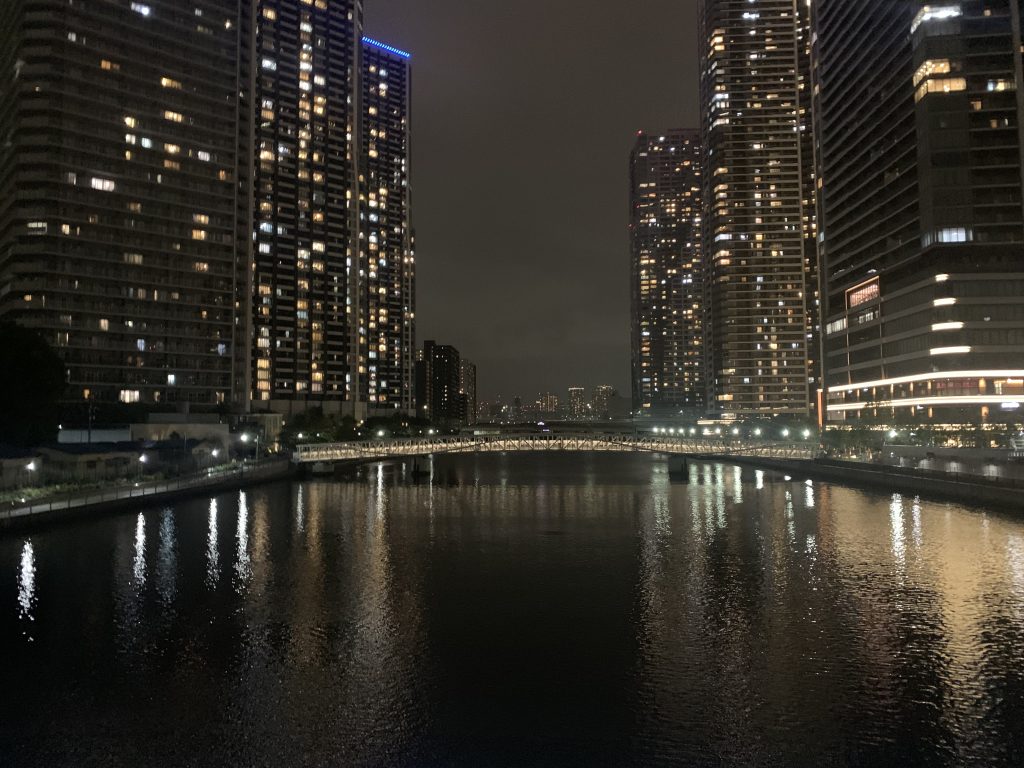
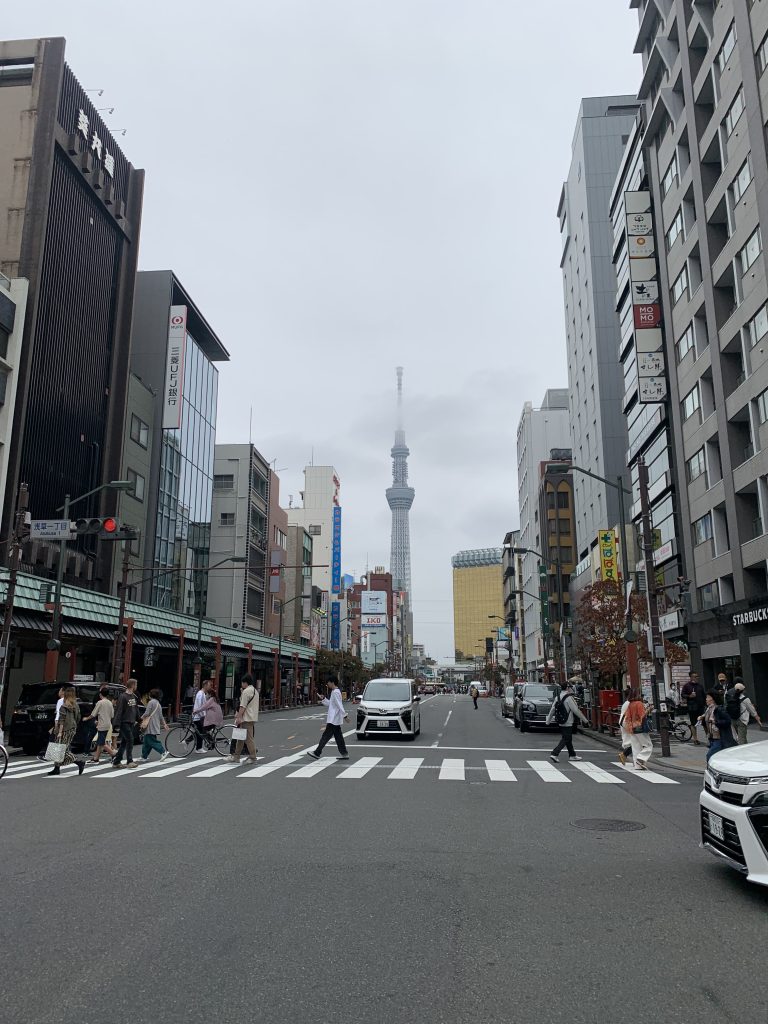
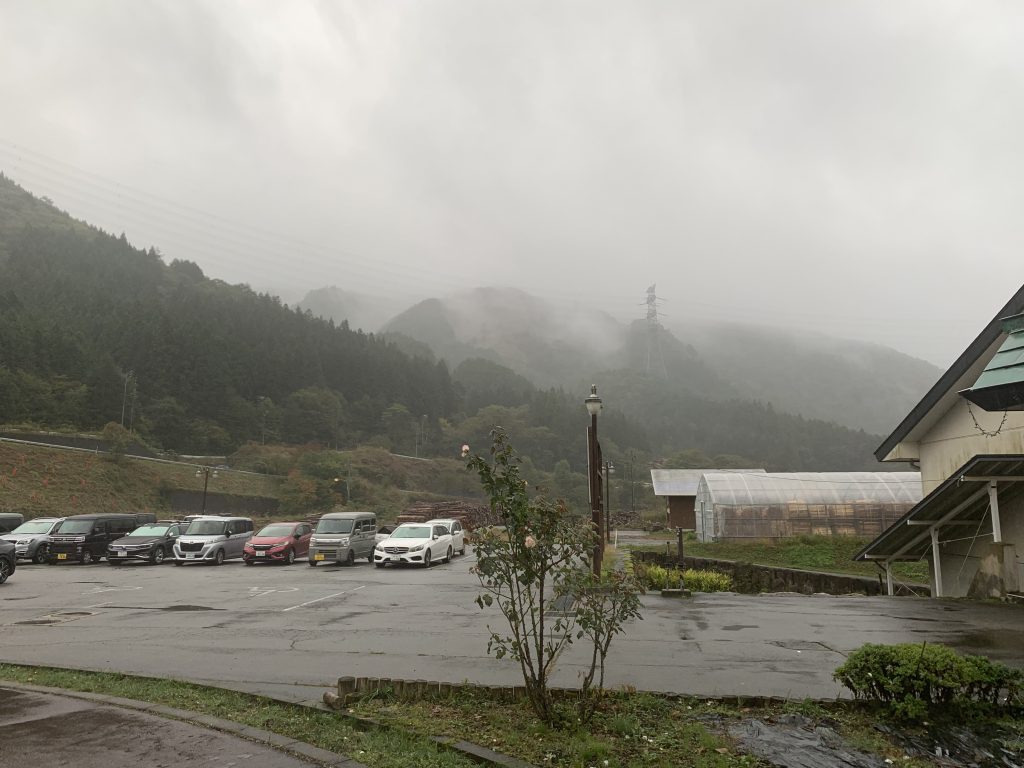
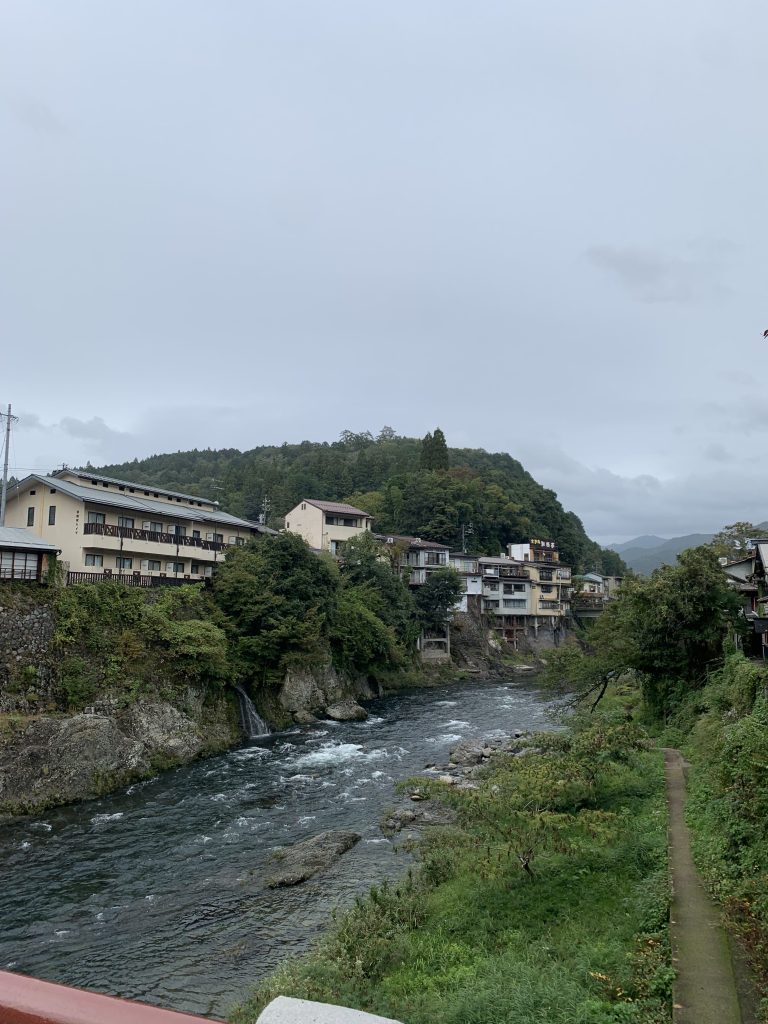

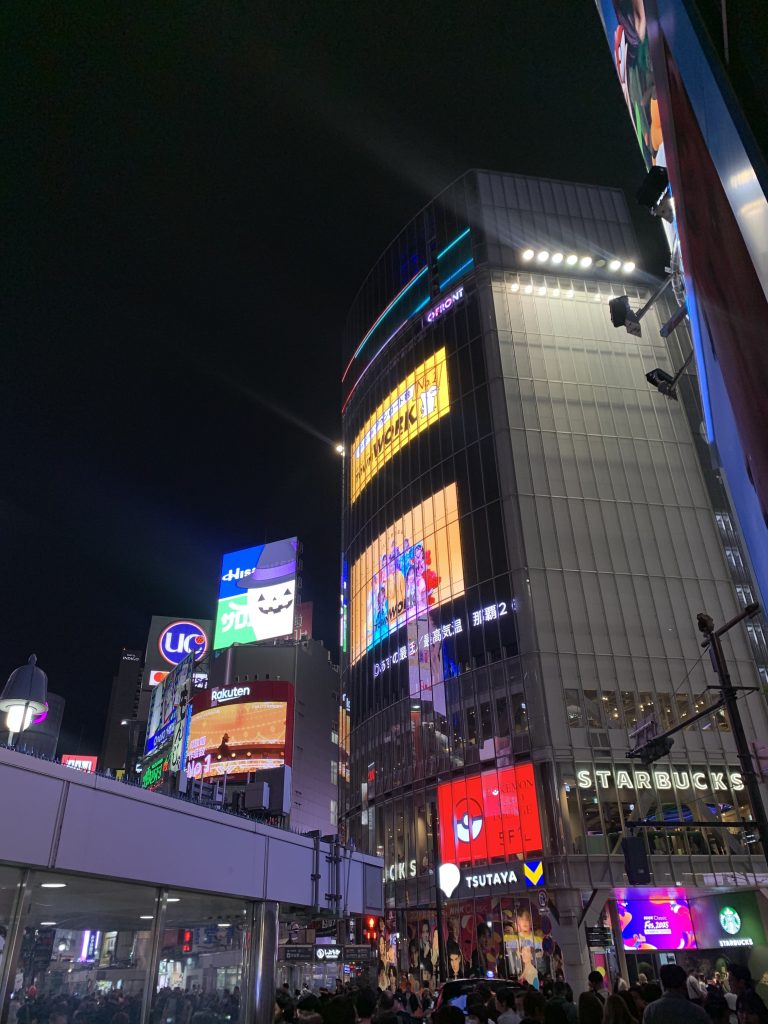
We were also able to try so many activities: participating in a tea ceremony, learning about sake history (and tasting some!), making wagashi and food replicas, wearing kimono, going to a sports day, trying an onsen, riding the Shinkansen, going to the convenience stores, and, of course, sharing countless meals together. Each activity taught us not only about Japan, but also about ourselves. Traveling to new places and adapting to a different environment opened us a new perspective, knowledge, friendships, and personal growth.
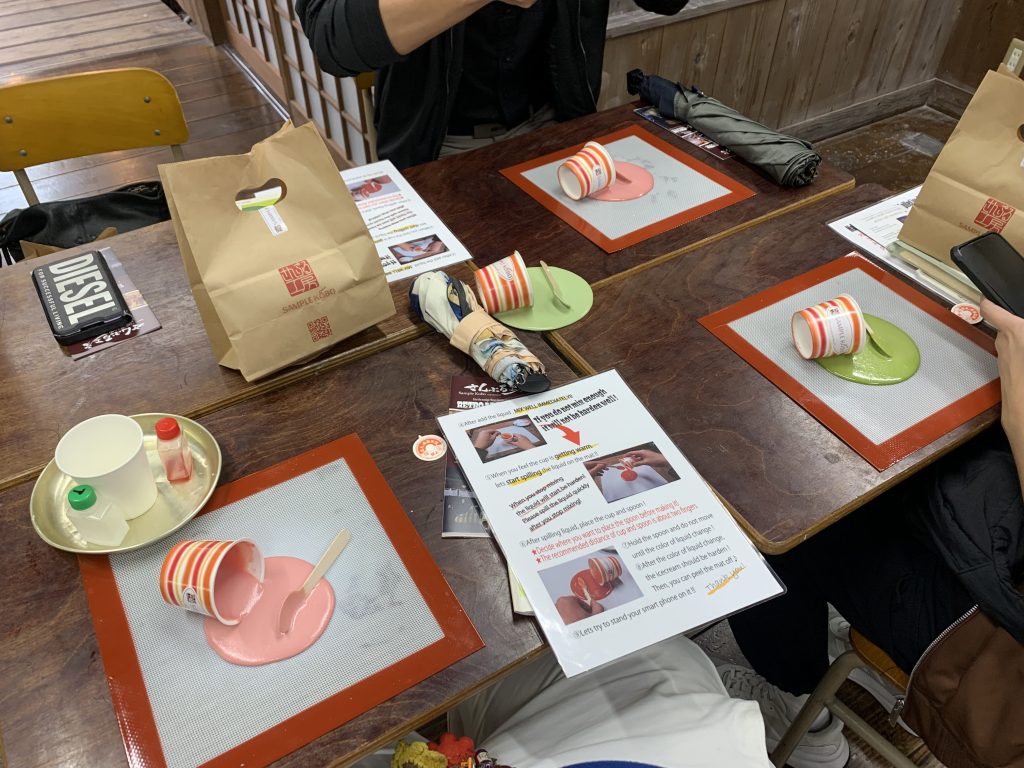

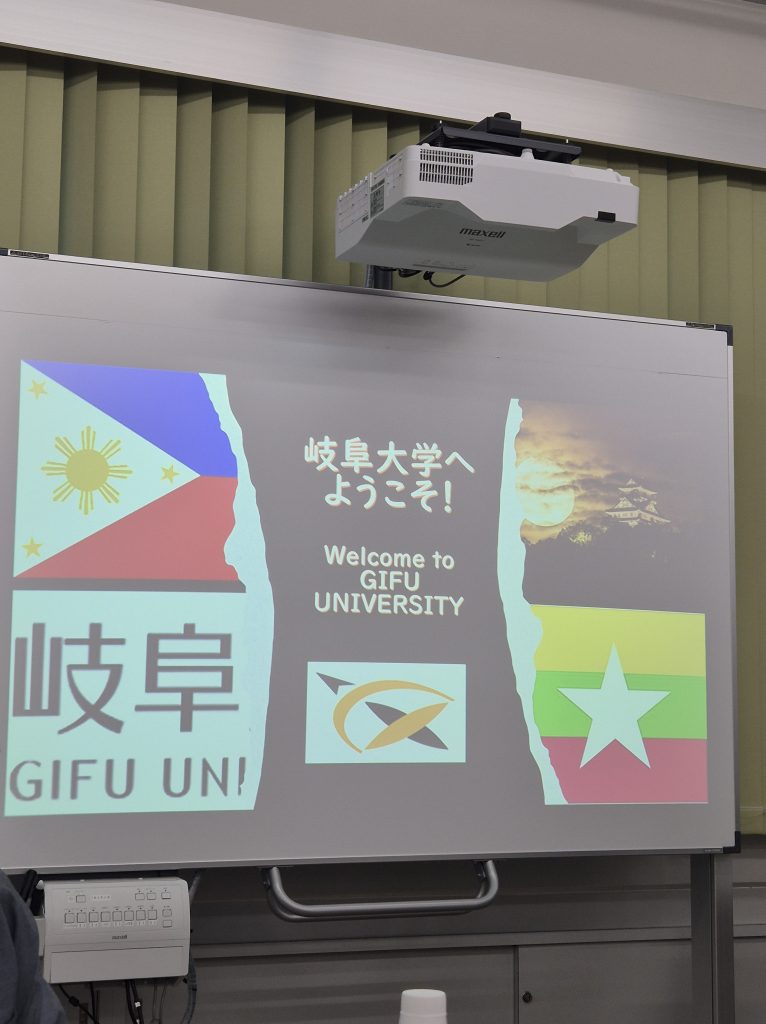
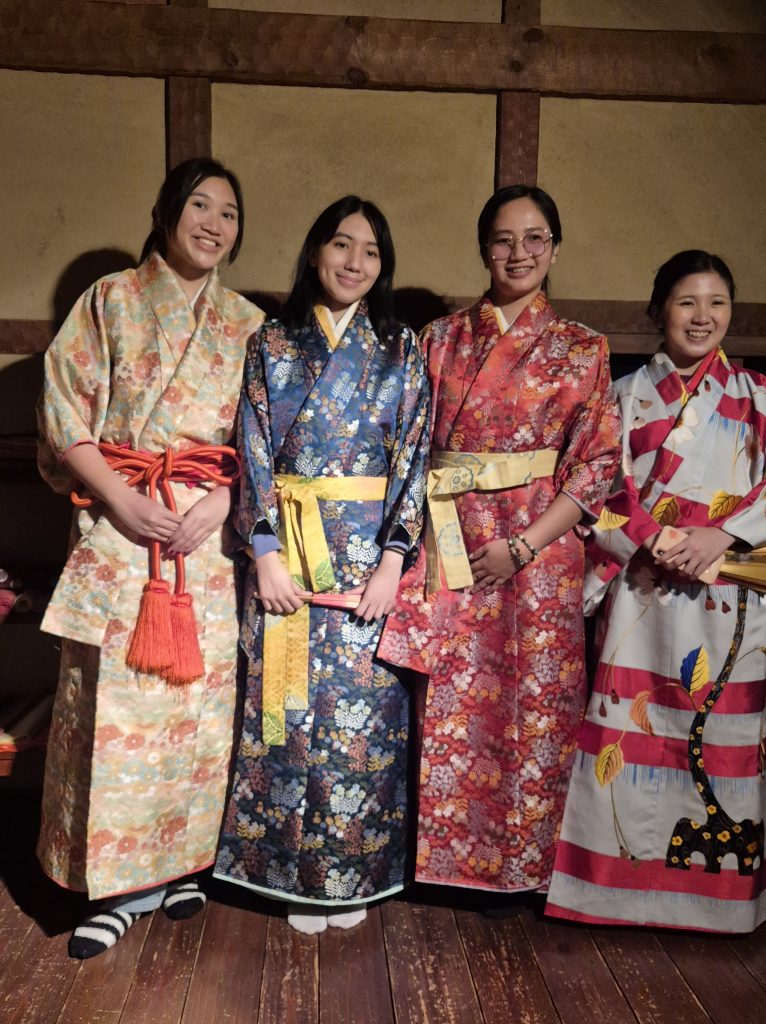

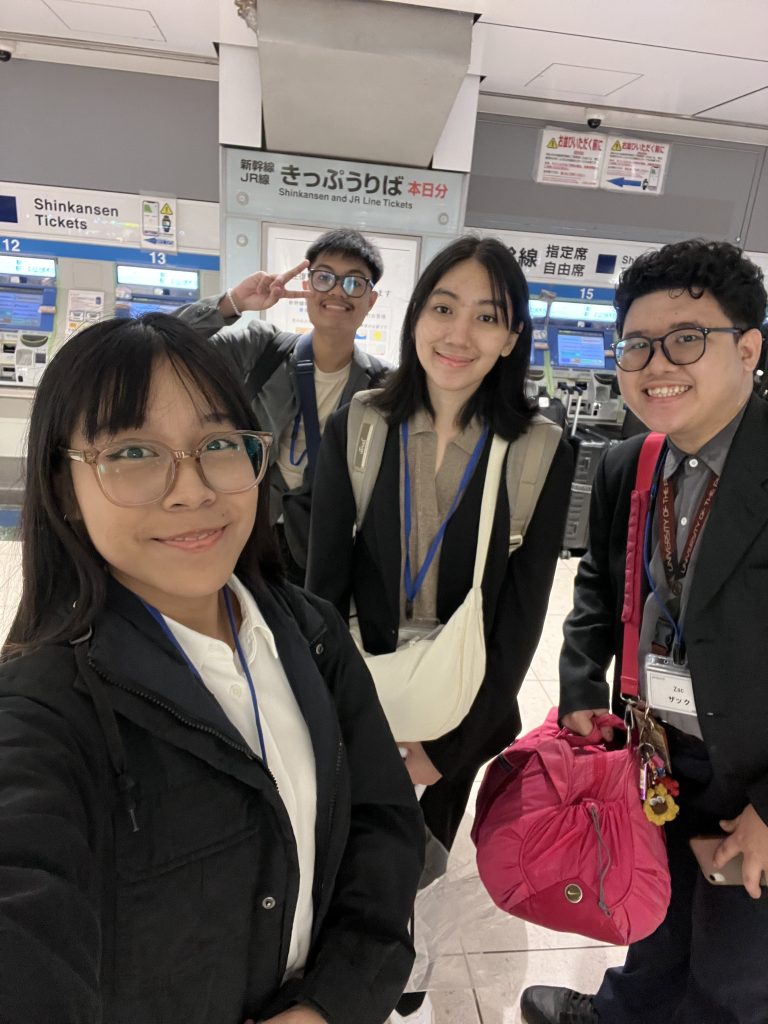
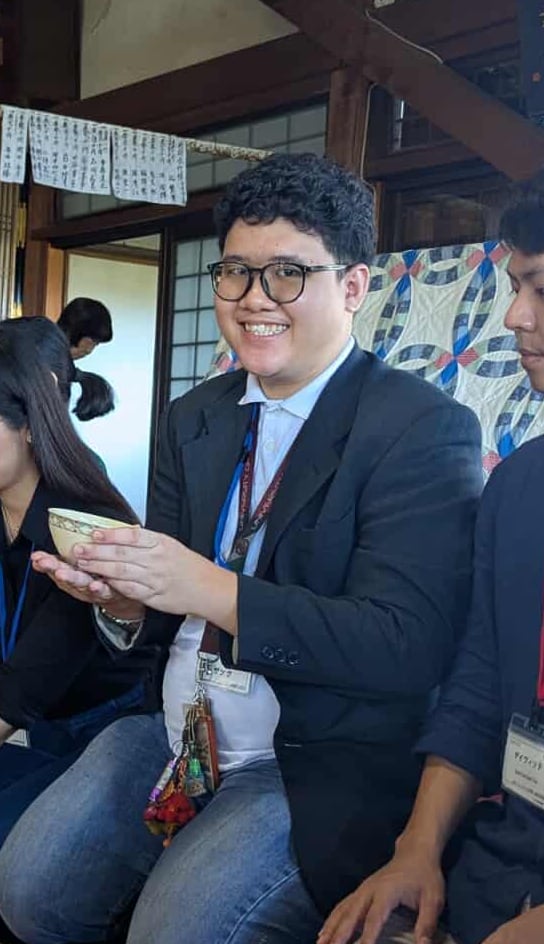
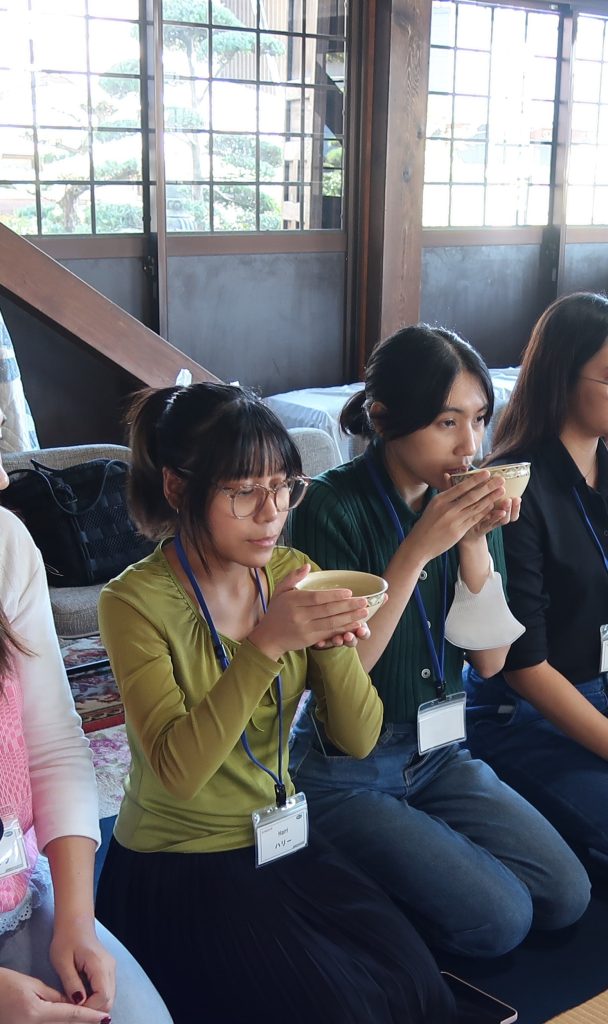
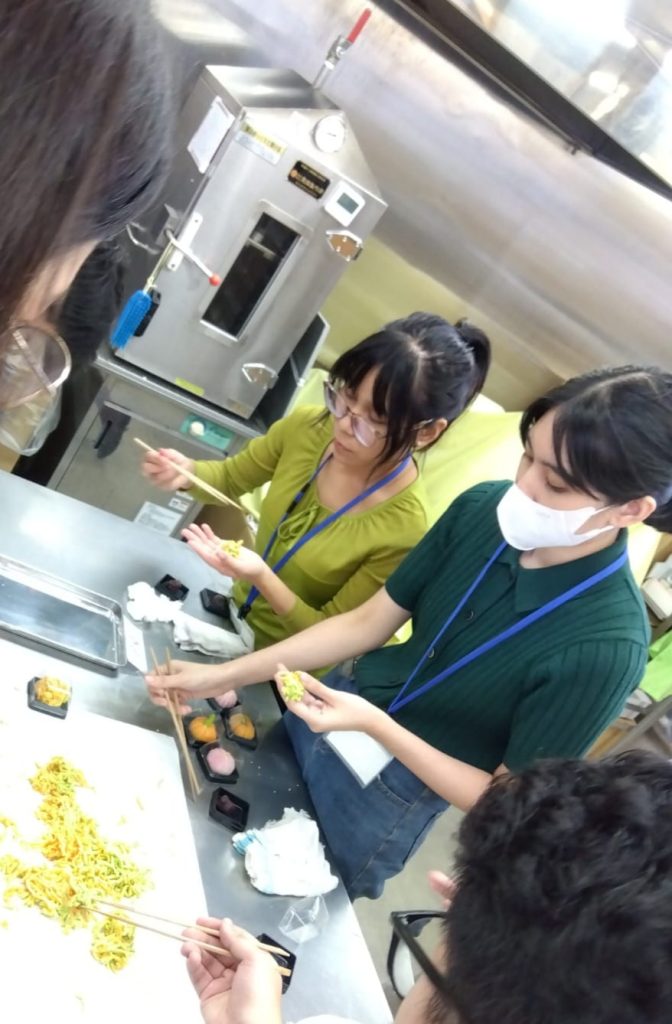
One of the things we got used to and enjoyed was how people picked up on our differences. Those small interactions, and even the curious questions, opened our eyes to both the similarities and differences between our culture and theirs. From punctuality to their bathing culture, from food to temple etiquette, every detail showed us something new. Going out and experiencing Japan firsthand made us appreciate how culture shapes even the simplest parts of daily life.
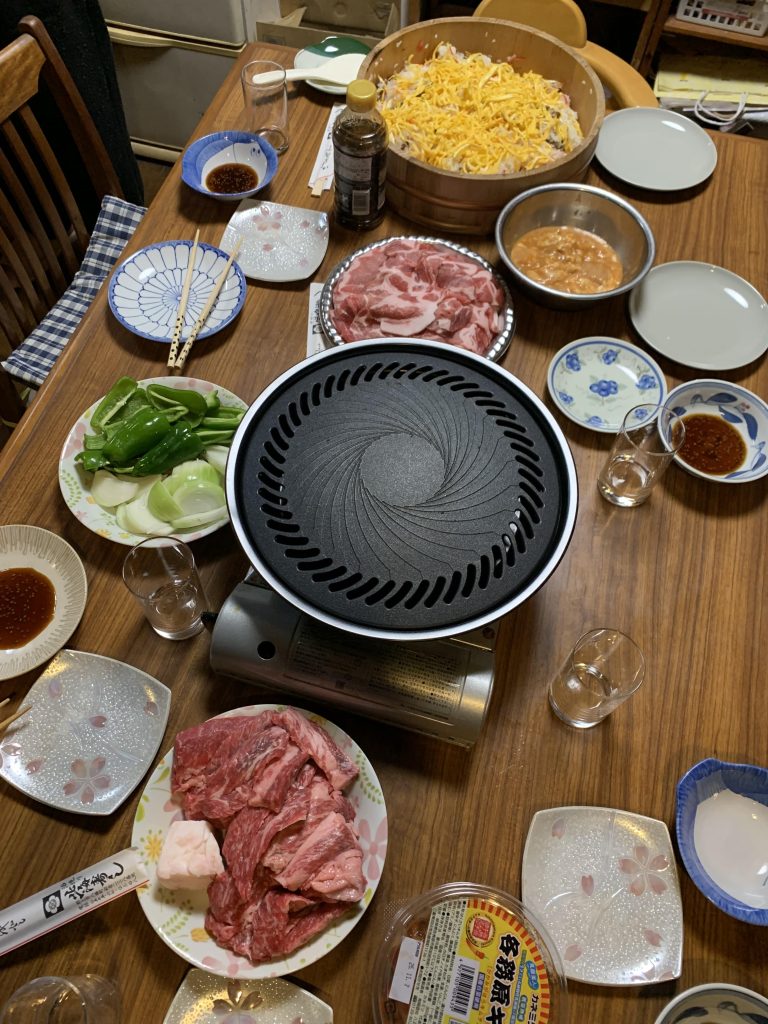
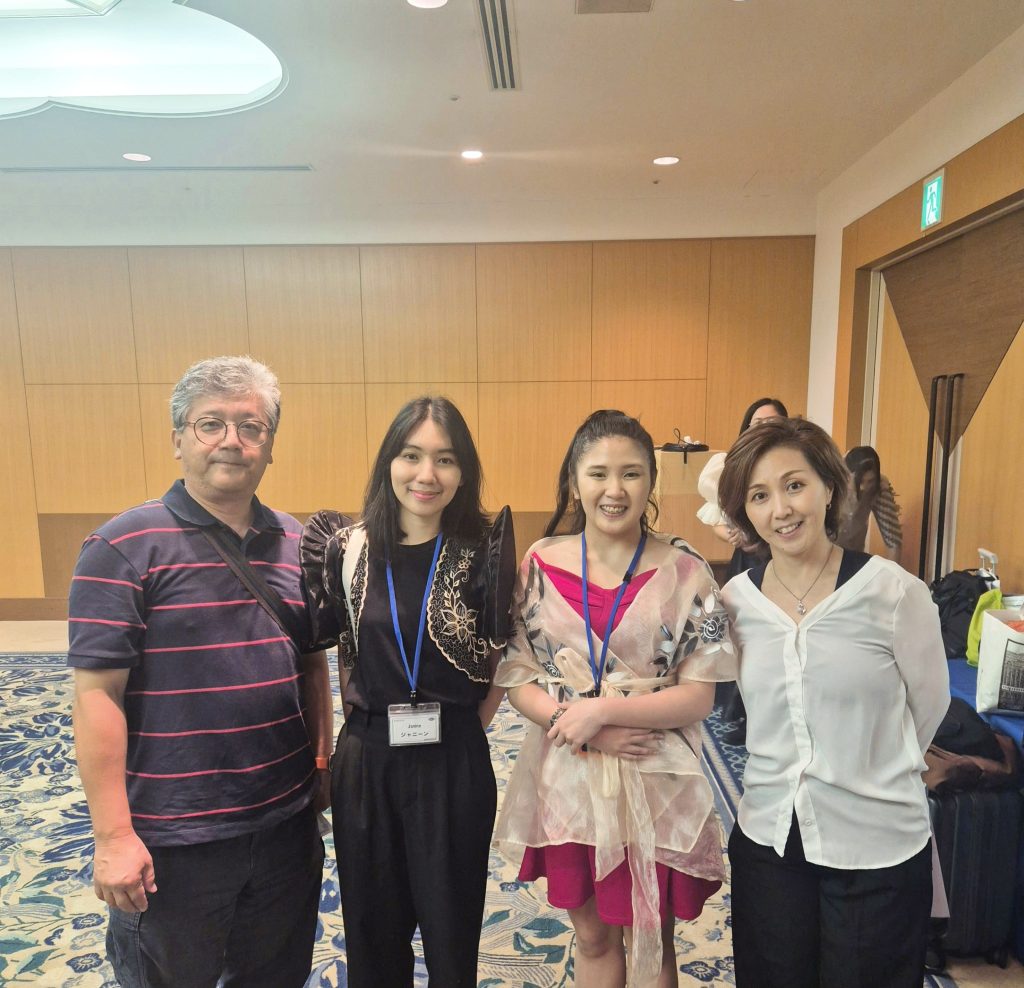
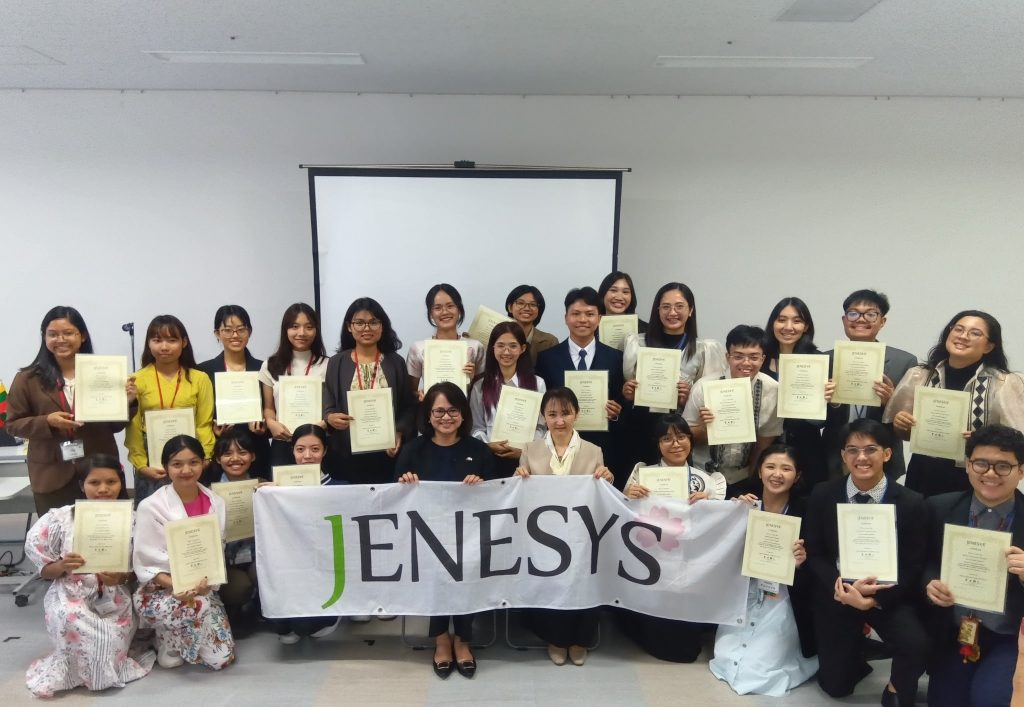
Speaking of culture, the heart of it all was the people we met. One of the best parts of the program was meeting people—from Japan, from Myanmar, and from our very own. Everyone was warm, open, and never hesitant to give a helping hand. We gained friendships and a new family that we’ll hold onto even after the program ended.
And of course, the highlight of it all: staying with our host families. Even for such a short time, they welcomed us so genuinely that it felt like we were part of their home from the very beginning. The conversations, the shared meals, the laughter, the places visited—these are the heartfelt moments we will always treasure. We left Japan loving it even more than before. For that, we’ll always be grateful.
Carrying These Memories Forward
Overall, the JENESYS Cultural Exchange Program gave us the opportunity to experience Japan to the fullest in a span of a week. Visiting important cultural heritages, walking around the busy streets of Akihabara and Asakusa, riding the shinkansen (bullet train) to Nagoya, taking a sneak peek of sake-making and wagashi assembling in Gifu, and living parts of daily Japanese life in our home stays—all of which giving us a glimpse of Japan in different ways. On top of that, we spent each day and activity with our Filipino and Myanmar teammates. This opened us to immerse not only in Japanese culture, but also, to connect with our brothers and sisters from neighboring Southeast Asian communities as well. (And we did all that mostly in Japanese, too!) With this, we saw how cultural exchange was not only present in the dedicated agendas of the day, but also within the interactions and stories shared through conversations over warm udon noodles, fluffy omurice, and sizzling okonomiyaki. Spaces, then, left with traces of stories spoken in languages familiar and unfamiliar, in a country we’ve always dreamed about. Truly, we can say our time in the program proves the expression: 一期一会 ichi go ichi e (one chance, one meeting). In this once-in-a-lifetime opportunity, not only did we get to directly see the country of our dreams; our world has also grown wider as we treasure the memories and experiences that we now share.
Once again, we would like to thank the people who made our trip possible. First and foremost, to JICE and the Embassy of Japan for providing us the opportunity to travel to Japan in the first place. During our stay, the warmth and approachability of the JICE staff.
To the UP Department of Linguistics for choosing us as this year’s participants, and for instilling in us the necessary knowledge that we brought with us during our trip—both on the Japanese language and their culture.
To our families who gave us their unwavering moral (and financial!) support as we went on this trip: in helping us pack our luggage, for being with us at the airport before our flight, and for constantly checking in on us during our stay.
To the friends we made along the way, both from the Philippines and Myanmar, who made the stay so much more enjoyable. Thank you for the memories that we made in that week we spent together, for all the joys and small struggles that we shared, and for the support system that we built together. We wouldn’t have been able to enjoy the stay as much without you.
Published by Janine Casangcapan, Luis Pablo Raphael Juliano, Harriet Gabrielle Malapit, and Kristian Zachary Matandac