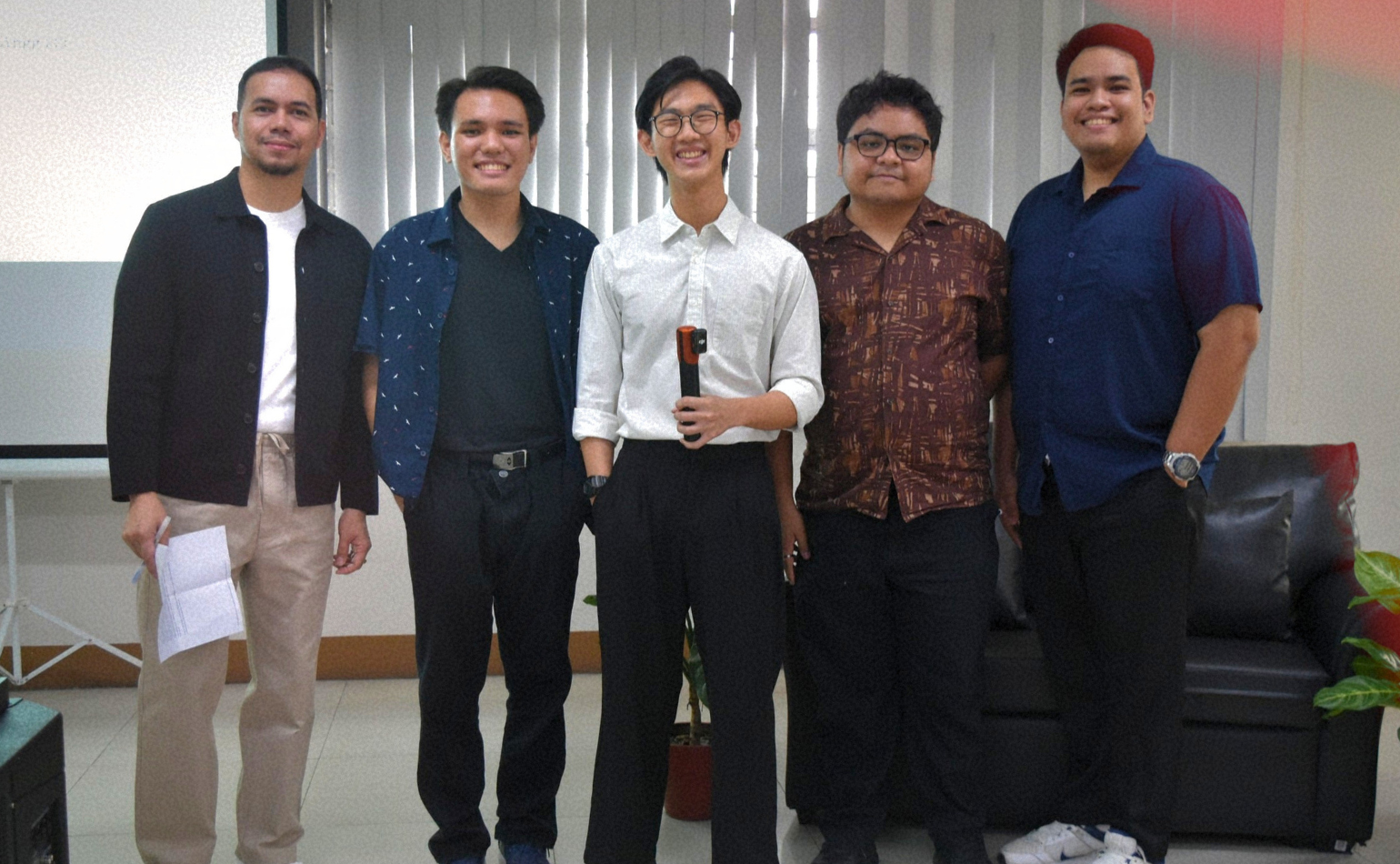
Graduate students of the Department presented their field findings and reflections during a forum titled, “Mimiayam: Mga Tala Mula sa Fildwurk ng Lingg 225,” last 22 September at the CSSP Health and Wellness Center, as part of the 2026 Lingg Month celebration. Facilitated by Professor Aldrin Lee, who also supervised the Linguistics 225 (Field Methods in Linguistics) fieldwork, the event showcased four MA Lingg students’ findings from their activities in coastal Pangasinan. Aside from the findings, they also shared personal experiences, realizations, and research tips.
Prof. Lee opened the event by introducing the nature of the fieldwork activities, which served as a core requirement for the course. Conducted during the midyear term of A.Y. 2024-2025, the field activities were led by Prof. Lee and carried out by students Brian Baran, Jethro Bautista, Ralph Mangalino, and Nico Salvador.
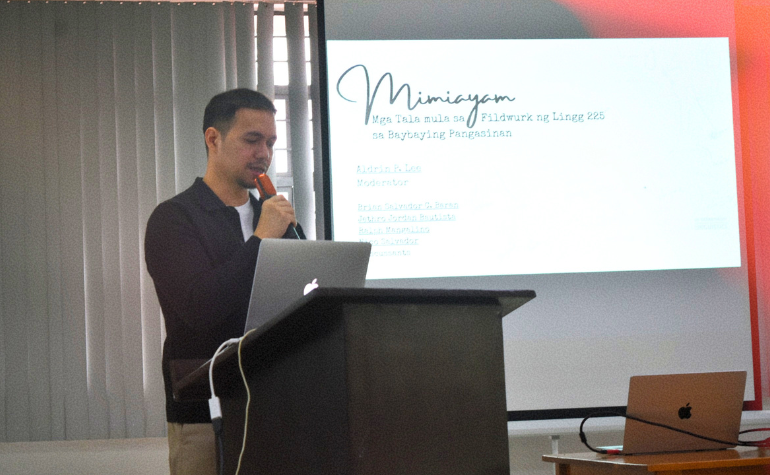
The presentation was divided into two major segments: (i) the process of studying a language in the field, (ii) and the experience of linguistic fieldwork itself.
Discoveries and findings from the field
Nico Salvador kicked off the fieldwork notes presentation with a summary of the research. 50 years after the last publication of Pangasinan grammar, the field class aimed to create preliminary documentation of coastal Pangasinan by describing its language varieties.
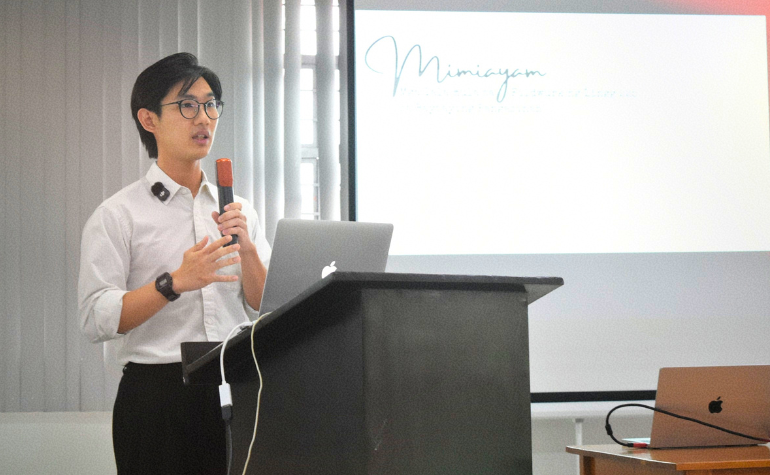
Following the summary, Ralph Mangalino provided an overview and timeline of 50 years of research on the Pangasinan language. One of the key references on the language mentioned was Richard A. Benton’s Pangasinan Reference Grammar published in 1971. The work provided a comprehensive overview of the language’s morphology, phonology, and syntax, which served as an essential reference for the fieldwork study.
Furthermore, Mangalino presented the research questions guiding their field class during their research in the coastal areas of Pangasinan: (1) Ano-anong mga uring panggramatikang naitala ni Benton ang nariyan pa? [what grammatical features identified by Benton still exist?], (2) Ano-anong mga uri ang mga nagbago? [what changes have occured?], (3) Ano-anong mga uri ang bago at hindi pa naitatala? [what structures are new and have not yet been described?], and (4) Ano-anong pagkakaiba ang mga napansin? [what differences have been observed?]
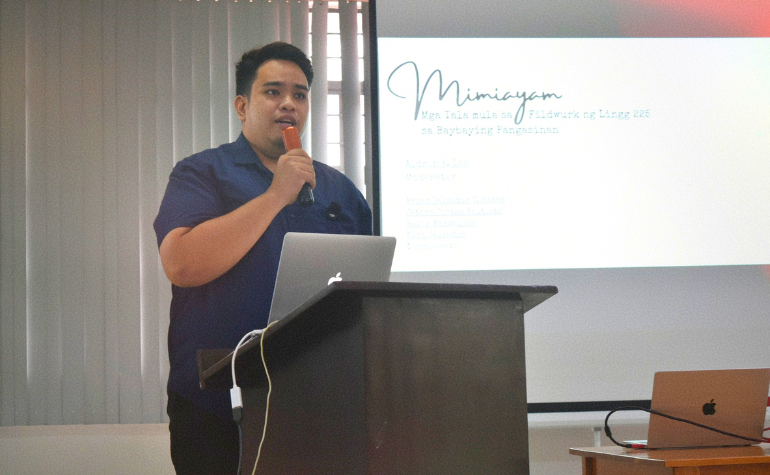
They shared that one of the main purposes of the fieldwork is not to produce a dialectology, but to reveal and record what has not yet been accounted for in the Pangasinan grammar, specifically among the speech communities in the coastal areas of Binmaley, Lingayen, San Fabian, and Dagupan.
Salvador then proceeded to the presentation of their field findings in Pangasinan lexicography. He presented a few published references and dictionaries, noting that most either focus on inland vocabulary or that the differences or boundaries between vocabularies across different communities were not greatly considered.
According to Lee (2022), there are words specific or innate within the people of a community. In the field, three domains were identified by the researchers: Dagat [the sea], Mga Gawaing Pandagat [sea-related activities], and Mga Lamang Dagat [sea creatures]. Revealing innate words, this highlighted the importance of fieldwork to further verify vocabulary, the continuous effort of existing literature, and the research currently being conducted.
Following lexicography, Bautista then focused on phonology. He began by echoing Himes (1998) in saying that Pangasinan is closely related to the Proto-Southern Cordilleran language. Similar to other Philippine languages, Pangasinan also exhibits allophony, such as /r/ → [d] / V_V, which Bautista furthered during the discussion in phonology, specifically allophony.
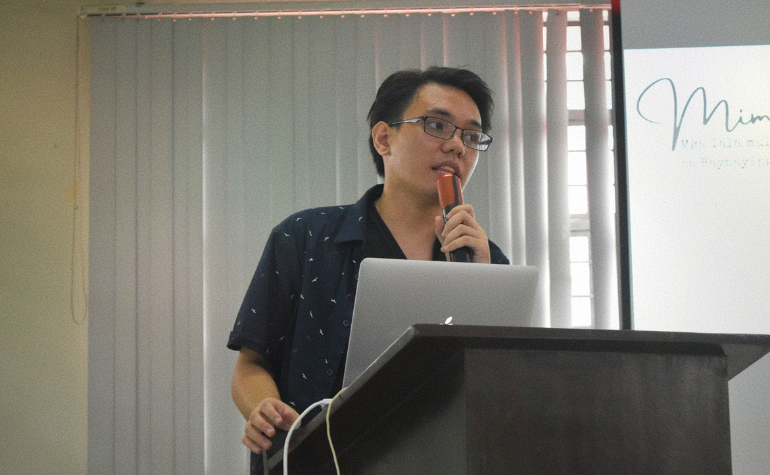
The debate over the existence of a glottal stop in the coastal Pangasinan sound inventory was also raised, with the discussants stating that they were able to observe the said sound. However, they also noted that the sound is usually omitted, especially in phonemic form. Furthermore, debuccalization was found to occur usually in plosive codas, which previous grammars did not mention. Bautista also noted that plosive codas were observed mostly among older speakers.
Additionally, discussants noted instances of gemination—a phonological process absent in previous literature, which generally restricts the occurrence of double consonants to single morphemes only.
In the latter part of the first section of the panel discussion, Baran delved into the morphosyntax of coastal Pangasinan. Among the previously discussed aspects of grammar, morphosyntax was considered the most established. Included in the presentation of the determiners were the grammatical case categories, as well as linkers. The discussed linker was ya, which, when written in genitive form, appears as na or la, meanwhile appearing =y in its neutral form. Moreover, the nominative forms were identified as s and si. However, data collected by the class showed that several determiners exhibit multipurposeness, challenging the previous understanding that each had a distinct purpose.
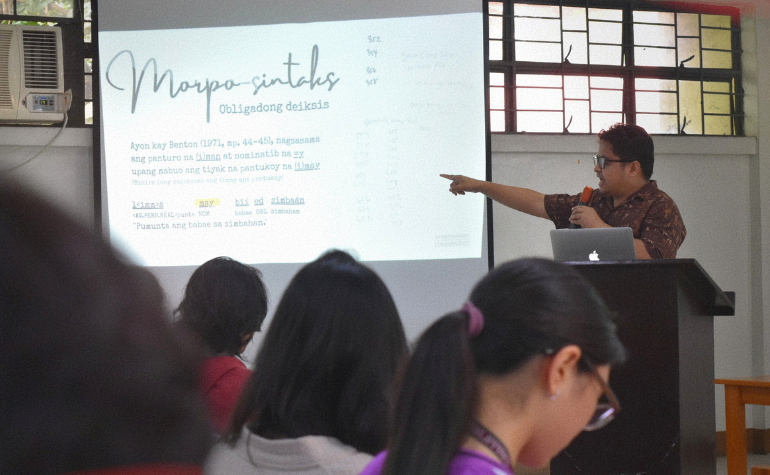
Moving to the topic of obligatory deixis, may as a definitive marker is formed when the demonstrative (i)man and the nominative =y combine, while other determiners rarely combine. However, collected data revealed that it is not only (i)man that combines with =y. Other demonstratives that are said to do so include ta and ya – forming ta=y and ya=y, respectively.
On cross-references, Baran showed how it was resolved in coastal Pangasinan. Three methods were presented for how the presence of two nominative arguments was resolved, namely: (1) the existence of cross-reference or clitic-doubling in the agent, (2) putting the agent first in the order or sequencing in the sentence, and (3) the actual nominative, which has not been mentioned yet, is attached with (s)a=. These three strategies may also be applied in a single sentence altogether. Additionally, it was presented how the language exhibits the rare occurrence of cross-referencing a patient when the verb is in the agent voice.
Finally, the first part of the discussion concluded with the sharing of information regarding Pangasinan’s syntax, specifically on the restrictions on obliques and possessives.
Reflections and realizations from the field
Following the presentation of their grammatical findings, the panel moved to the practical and personal dimensions of fieldwork. In this latter part of the event, the discussants addressed questions regarding the fieldwork process, challenges, ethics, and personal experiences while undertaking the study. The topic of determining, finding, and interacting with informants or participants posed great curiosity among the event’s attendees.
At the beginning of the open forum, a question was raised regarding the language barriers experienced by the researchers and how they faced this, where Baran shared the importance of negotiation and pakikiramdam between the researchers and informants in building rapport despite the challenge. The discussants also reminded the event attendees that informants have autonomy over the type of data they can provide.
The creation and completion of the wordlist was also of great interest among the attendees. Given the extensive 500-word and 700-sentence elicitation lists, the data collection process proved to be time-consuming. However, Mangalino shared that an informant, a speaker from Lingayen, continuously answered the lists despite their lengthy nature.
The researchers shared that they utilized the readily available wordlists from the Department, which are composed of core vocabulary. Then, reinforcing the concept of island linguistics, Baran said that an ethnographic wordlist was developed, where more words were added based on coastal terms more specific to the culture being observed. The importance of research questions was also noted as a guide for adding or removing content from the wordlists. As for incomplete word data, the discussants returned to the solicited data to check, verify, and validate.
Concluding the panel discussion, the researchers reflected on their future aspirations for linguistic fieldwork. Baran expressed his broad ambition to conduct fieldwork across diverse regions, while highlighting a specific interest in Sarangani. Mangalino identified the Dumagat peoples as his ideal linguistic research focus, while Bautista shared his interest in conducting fieldwork in Alaminos, Maniguin, and Alabat Island. Finally, Salvador shared his ambition to pursue linguistic research in Zamboanga, inspired by a friend who was a speaker of the language.
Additionally, research facilitator and event moderator Prof. Lee, whose research centers on island linguistics, shared that he would like to be able to study all island languages in the Philippines and be able to further study the Philippines’ relationship with the neighboring islands in the south.
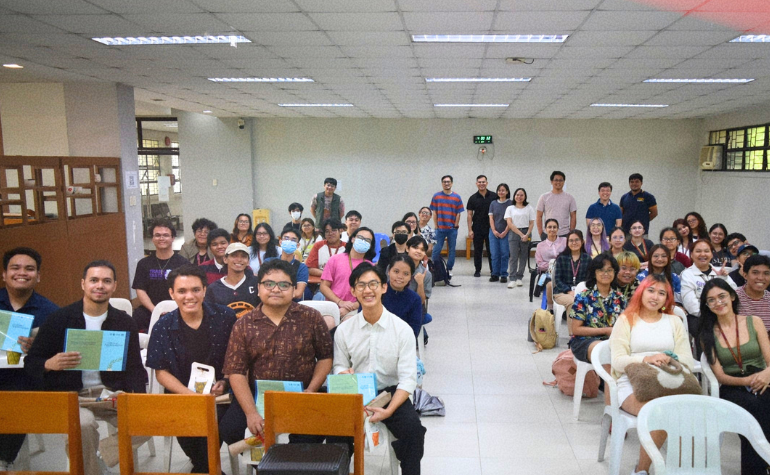
The event not only provided a space for the researchers to discuss their findings and personal anecdotes from the fieldwork, but also provided an opportunity for the attendees, especially Lingg majors, to gain an overview of the research path in the discipline.
Photos by Syafiqah Rahma Basiril
Published by Corinne Angelique Cedo