During my stay as a Visiting Research Fellow (VRF) at the University of the Philippines Diliman from January 15 to February 3, 2026, I worked on the project entitled “Sustainable Language Documentation,” funded by the Kone Foundation and the University of Helsinki. The project aims to develop sustainable practices for language documentation, using as its empirical foundation a collaborative effort focused on three Spanish contact varieties of the Philippines (ISO 639-3 [cbk]): Cavite, Cotabato, and Davao Chabacano. The first phase of the project centers on Cavite Chabacano, a variety that is rapidly declining and requires urgent documentation to preserve it for future generations. In later stages, the project will shift to Cotabato and Davao, where Chabacano is known to be spoken but remains largely undocumented. Our team of three researchers and two research assistants works with both existing language materials and newly collected data. The long‑term goal is to create a comprehensive documentary corpus for preservation in a permanent archive while also ensuring that the work responds to community needs. Strengthening partnerships in Cavite City with individuals and groups dedicated to language preservation was therefore an important aspect of my visit.
At UP Diliman, I met with staff of the Department, especially Chair Francisco Rosario and Assoc. Prof. Maria Kristina Gallego. These discussions allowed us to share ideas about the project’s objectives and learn more about the department’s research and teaching activities. We also met with Teaching Assoc. Patricia Asuncion, a graduate student planning fieldwork in a Mindanao community relevant to our research, opening opportunities for future collaboration. In addition, we exchanged preliminary ideas about organizing joint linguistic fieldwork training for graduate students in the Philippines in 2027, provided that funding can be secured. I will also give an online lecture (Sustainable Language Documentation in Creole Settings) to UP students and staff in 21 February, as part of the International Mother Language Day (IMLD) 2026.
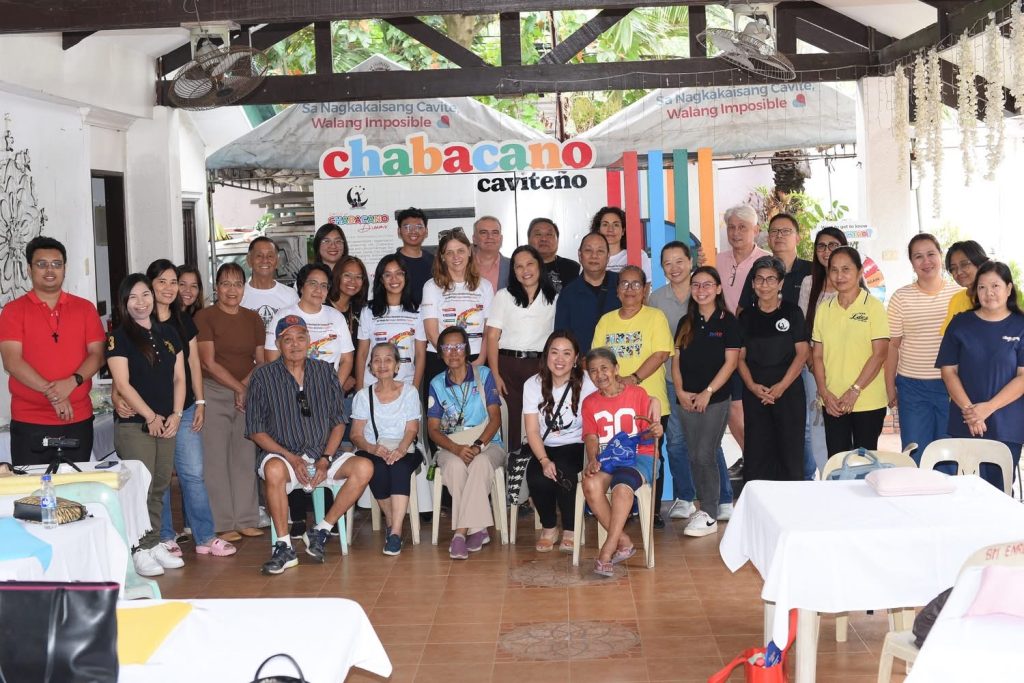
Beyond the University, we visited Chabacano-speaking communities in both Ternate and Cavite City. In Cavite City, an especially fruitful connection was made with the local NGO, the Circle of Chabacano Dreams, whose mission closely aligns with ours. Over the course of three weeks, we collaborated on several activities: interviewing Chabacano speakers, reviewing existing language materials, organizing a seminar on Cavite City’s Chabacano heritage and culture, and conducting a workshop with speakers and local stakeholders to discuss project goals and community priorities. These interactions offered valuable insights into how community members view documentation and how the project can support local initiatives.
We also met with representatives from organizations deeply involved in cultural and linguistic work, including the Real Academia Filipina and Instituto Cervantes. These meetings provided opportunities to exchange ideas and explore possibilities for additional cooperation in the future.
Overall, my stay in the Philippines was a rewarding and productive experience. It strengthened the foundations of our research on Cavite Chabacano, deepened partnerships with local communities and institutions, and helped refine our understanding of how sustainable language documentation can be carried out collaboratively and responsibly. The connections established during this visit will play an important role in shaping the next stages of the project.
Published by Eeva M. Sippola