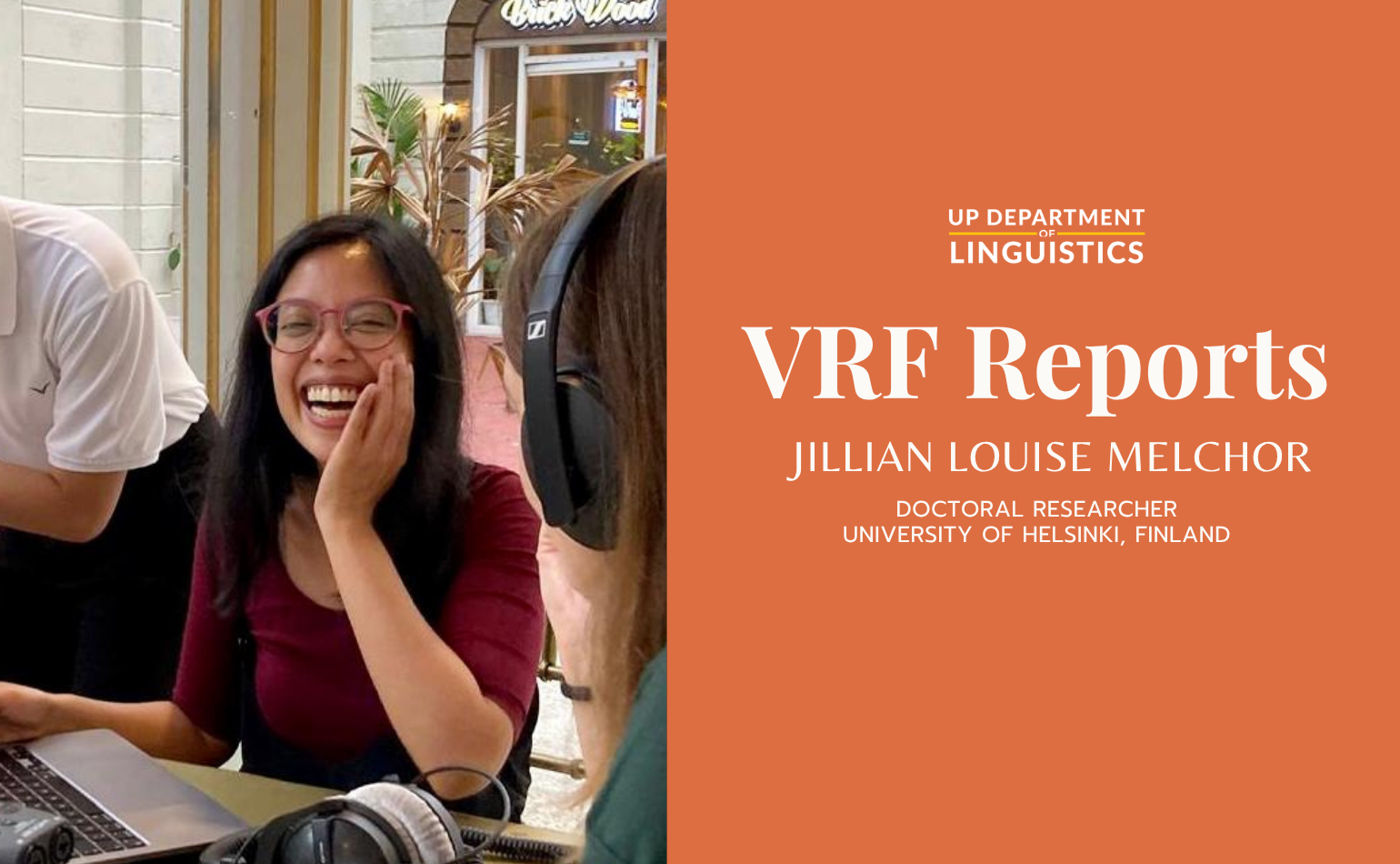
From October 2025 to February 2026, I joined the UP Department of Linguistics as a Visiting Research Fellow. I am a doctoral researcher investigating decolonial paradigms for the scholarship and preservation of creole languages, with particular focus on the Chabacano varieties of the Philippines. Alongside my doctoral research, I am part of the Sustainable Language Documentation project funded by the University of Helsinki and the Kone Foundation, led by my supervisor, Prof. Eeva Sippola.
During my time in the Philippines, I engaged in a range of academic and fieldwork activities, primarily in Cavite City and Ternate, where Chabacano continues to be spoken, albeit with varying vitality. My fieldwork period began in October with participation in the VII Jornadas de ELE Manila, co-organised by the UPD Department of European Languages. This event marked the first participation of the Cavite-based NGO Circle of Chabacano Dreams, which showcased locally produced language materials. There, I established contact with Ms. Arlene Cortes, the organisation’s Chabacano-speaking language consultant and author of these materials.
This encounter initiated a collaboration that would become central to subsequent fieldwork activities. She helped me establish contacts with Cavite Chabacano speakers willing to participate in sociolinguistic interviews, especially since the use of Chabacano is not as widespread as in Ternate. Attending to these contrasting sociolinguistic conditions, I conducted fieldwork in Ternate during the final month and a half of my stay, where I worked closely with Mr. Laudi Dinglas Tomas, a language activist and heritage promoter. There, I conducted interviews with speakers across age groups and socioeconomic backgrounds, from politicians to market vendors, and from transport workers to educators.
A highlight of my fellowship period was participating in dialogues that brought together community advocates, educators, and policymakers, including representatives from the Komisyon sa Wikang Filipino. In a meeting with the KWF, stakeholders were informed that the development of a standardised orthography is a prerequisite for the inclusion of Chabacano as a mother tongue subject in the basic education curriculum in Cavite City, one of the NGO’s core advocacies. In response, the Sustainable Language Documentation research team contributed to ongoing community efforts by preparing a comprehensive report on the methods, practices, and challenges of standardising creole orthography across Chabacano-speaking communities. The report was sent to community partners as an empirically grounded resource to support their advocacy and planning.
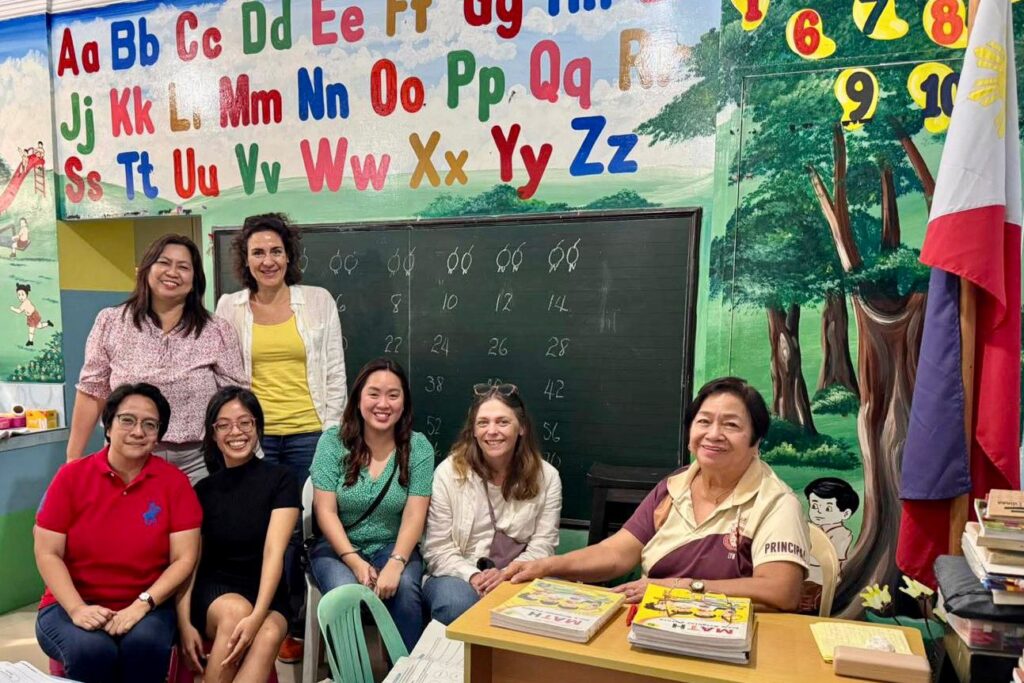
In January, Prof. Eeva Sippola and fellow project member Danae Perez joined me in the Philippines for a week of intensive fieldwork in Cavite City. During this period, we conversed with representatives from across sectors, including education, tourism, and local governance, on the role of Chabacano in contemporary society. These exchanges culminated in a community workshop that our team co-organised with the Circle of Chabacano Dreams and hosted by its president, Che Enriquez. The workshop focused on collaborative goal-setting for language documentation and encouraged active community participation in ongoing preservation initiatives.
Working with students and academic communities was a particularly rewarding facet of my fellowship. Soon after connecting with local partners, I participated in a Youth Leaders Seminar organised by the Department of Education in Cavite City, where I spoke with high school students about language ecology and the importance of preserving linguistic diversity in a rapidly globalising world. I later continued these conversations at Cavite State University’s Research Day, where I highlighted the role of language documentation in sustaining endangered languages and shaping heritage discourses. These engagements provided valuable opportunities to connect with both young students and fellow researchers around questions of language, identity, and cultural continuity.
I concluded this series of talks with a lecture hosted by the UPD Department of Linguistics. In line with the Lingg 180 course (“Mga Problemang Pangwika sa Pilipinas”), I focused on the first article of my PhD project, which examines the sociolinguistics of creole naming and the politics of language description, using Chabacano as a case study. The study also considers broader examples of the unintended consequences of language documentation in the Philippine context, particularly where linguistic scholarship may clash with speaker perspectives.
Beyond the formal fellowship period, these collaborations have continued to grow. Together with partners at Cavite State University, we are developing a research proposal for a community-driven sociolinguistic census of Cavite Chabacano. This ongoing work reflects one of the most important insights from our fieldwork: that sustainable language documentation depends on long-term relationships, community engagement, and the sharing of methods and instruments that enable communities to carry forward preservation efforts independently.
I am deeply grateful for the support and guidance of my hosts at the UP Department of Linguistics, especially Prof. Kristina Gallego, whose invaluable help in preparing the ethical requirements of my study design was indispensable; Chair Francisco Rosario, whose mentorship and encouragement greatly enriched my fellowship experience; and administrative officer Ate Vicky, who efficiently ensured that my stay ran smoothly.
Published by Jillian Louise Melchor