The seventh and eighth installments of the Philippine Indigenous Languages Lecture Series (PILLS) were held last 28 August 2025 at the Pilar Herrera Hall, moderated by Inst. JM De Pano. These two installments of PILLS were also held in celebration of Lingg Month and the 103rd anniversary of the Department.
Igno discusses folk healing practices
The first presentation, titled “From Sambal Ayta to Tagalog Quezon: Folk healing traditions,” was given by Asst. Prof. Jay-Ar M. Igno. The lecture was based on reports from previous fieldworks conducted in Botolan, Zambales in 2017 and 2019, and in Dolores, Quezon in 2023, involving interviews, focus group discussions, and participant observation.
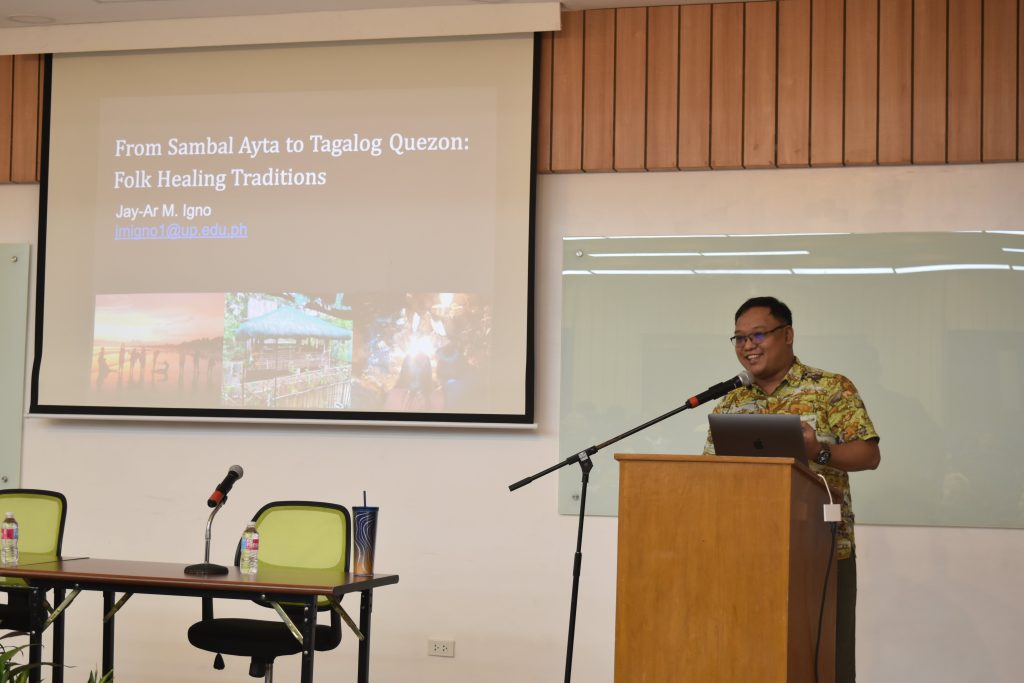
The study centered on traditional healing practices observed by speakers of Sambal Ayta [sbl], and aimed “to investigate the linguistic, cultural, and spiritual dimensions of folk healing traditions” by “exploring how herbal medicine, rituals, amulets, divination, and faith-based interventions serve as both healing practice and cultural expressions.”
Asst. Prof. Igno underscored the significance attributed by the Sambal Ayta to the concept of kainumayan (from inomay ‘state of happiness’ (Houck & Quinsay, 1968)), a term that shares similar senses with ginhawa (Paz, 2008). He explained that kainumayan refers to both the individual and the community’s aspirations, including the attainment of a simple and peaceful life. This primarily depends on factors such as one’s upbringing, societal norms, and religion.

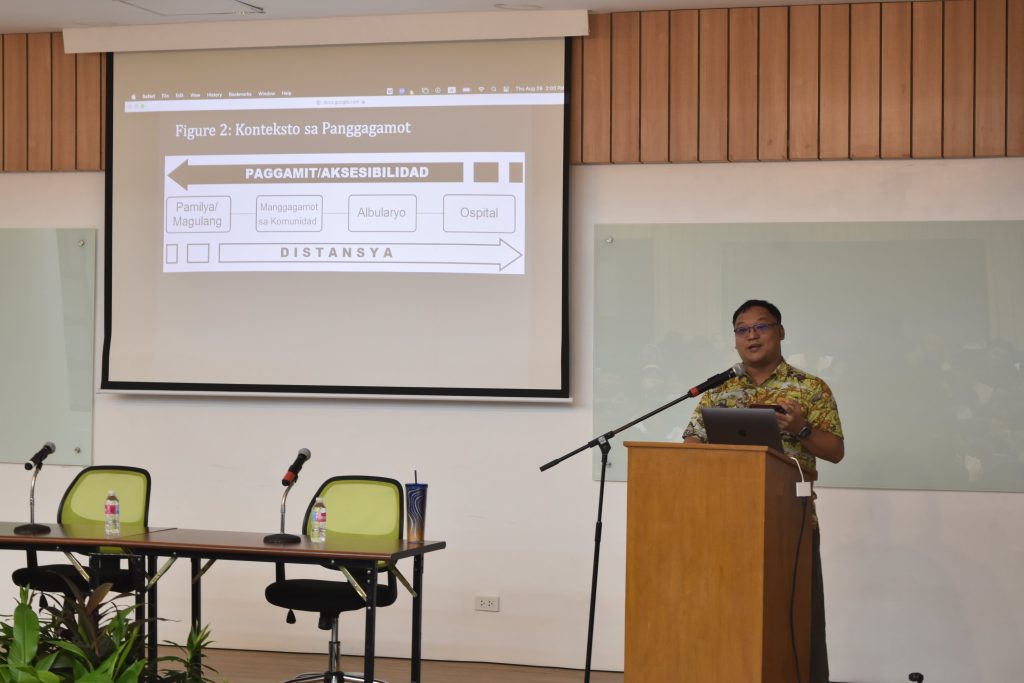
Igno then noted that the concept of health is an important foundation of the Sambal Ayta’s beliefs, and that good health is usually indicated by nimbleness, strong lungs, and other visible signs. Meanwhile, among those used to heal different illnesses are garlic—which effectively alleviates bagyo sa sikmura (lit. ‘storm in the stomach’), guava leaves, and jackfruit, as well as songs or chants and pag-aanito performed by an albularyo or an older community healer.
The Sambal Aytas, moreover, work towards the goal of maintaining a good relationship with spirits and the natural environment, in line with the belief that their existence are all interconnected. Thus, the lack of respect for such entities leads to tibi/tulandian/talbeng ‘punishment.’

Some questions raised by the audience focused on who can practice folk healing; what types of illnesses and/or diseases can such practices cure; and the language/s used in performing rituals.
Or looks into heritage languages
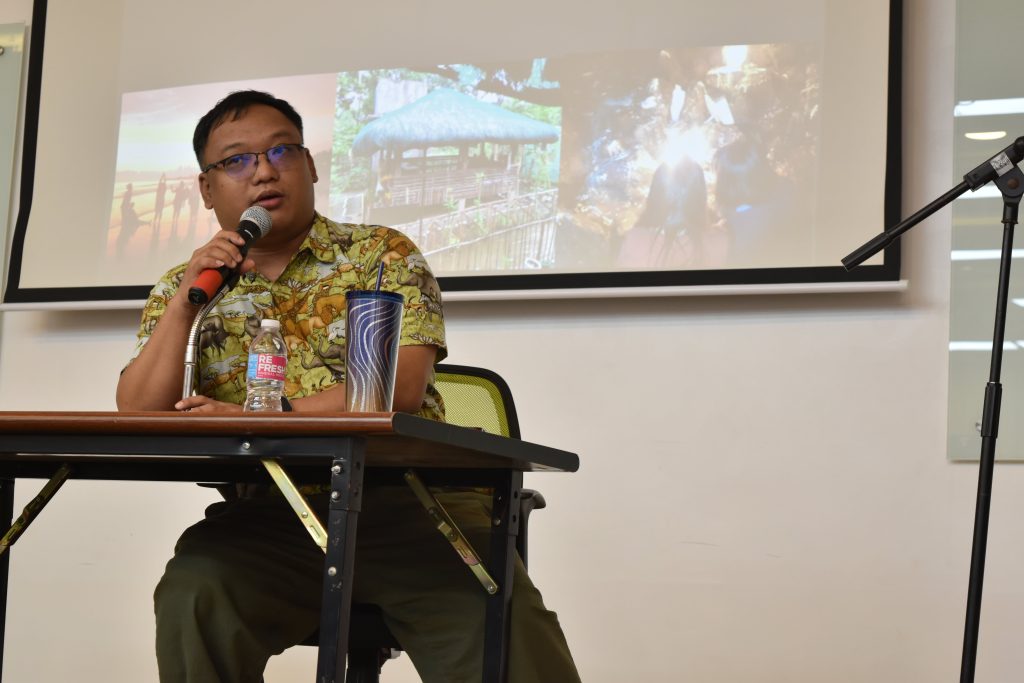
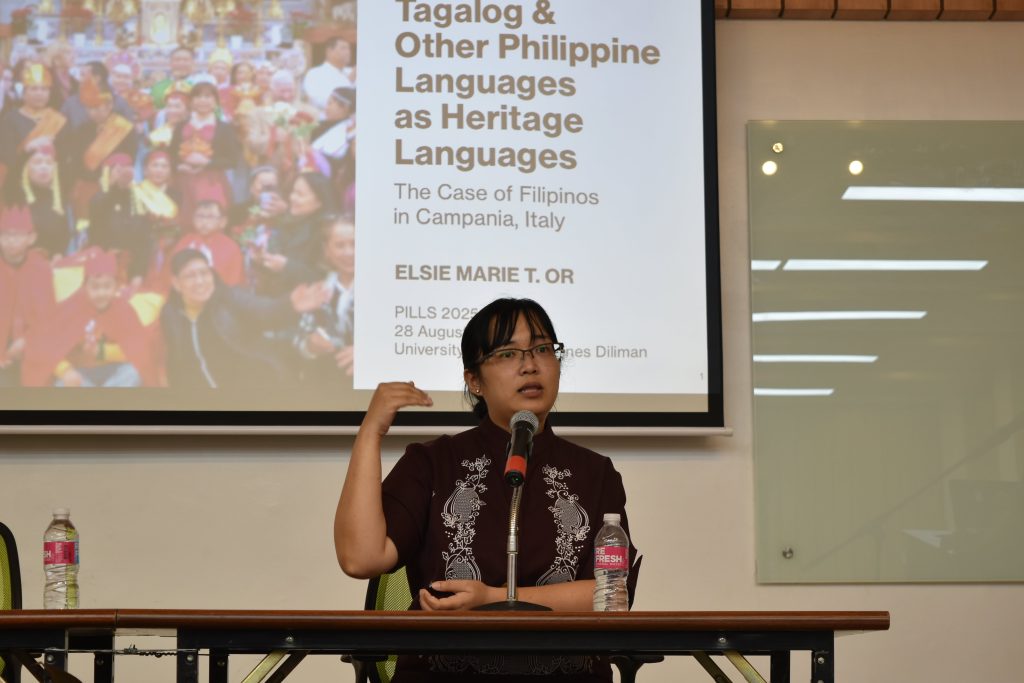
The second half of the program featured Asst. Prof. Elsie Marie T. Or, where she delivered the lecture “Tagalog & other Philippine languages as heritage languages: The case of Filipinos in Campania, Italy.” As part of her research doctorate program at the Università di Napoli L’Orientale (UNIOR), she is currently working on a project that aims to investigate the linguistic practices of Filipino immigrants in the Campania region of Italy.

Asst. Prof. Or first contextualized her research by asking what happens to languages when speakers migrate to foreign lands and discussed the primary objectives of her study. She also explained how the current study differs from its predecessor, the Hello Campania project, in terms of methodology and collected data, highlighting how naturalistic speech from pakikipagkwentuhan and spontaneous interactions can supplement and enrich findings derived from previous sociolinguistic interviews conducted in Italian.

Apart from pointing out the challenges usually encountered while doing fieldwork, such as securing consent, understanding community dynamics, and navigating power relationships, Asst. Prof. Or expounded on three key observations that encapsulate the attitudes of Filipino immigrants belonging to different generations, i.e., first (G1) and second (G2) generations, as well as the generation in between (G1.5).
First, languages are treated as social capital. Great value is still ascribed to proficiency in English [eng] given its status as a global language, while learning Tagalog [tgl] is considered a necessity for ease of communication with fellow Filipinos. Second, while there is generally a positive perception of multilingualism, interviewee responses reflected two main parental concerns (Quirk et al., 2024): (1) the effect of children’s multilingualism on their cognition; and (2) children’s exposure to and attainment of fluency in their languages. Or explained that experiences shared within communities contribute to shaping views on (and misconceptions regarding) learning and/or speaking several languages. Finally, regarding the correlation between language and identity, Or recounted that a G2 Pinoy stressed that learning Filipino [fil], the national language, is an essential means to retain a part of one’s heritage.
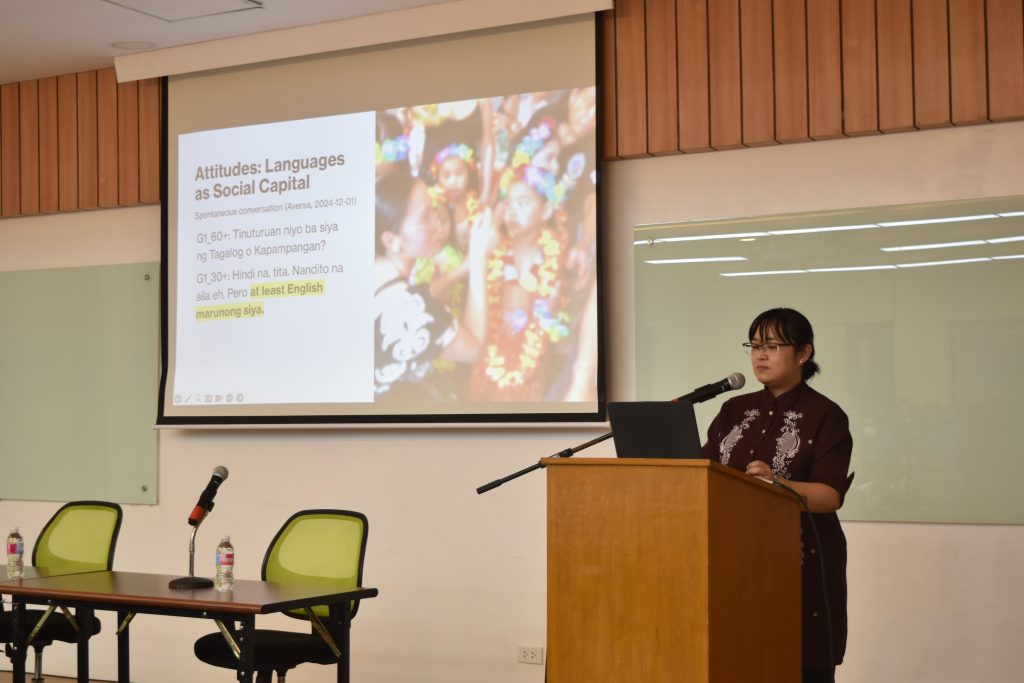

Additionally, a closer examination of Pinoy multilingual practices in Italy revealed the following contrast. G1 Pinoys who migrated for work learn Italian on the job. Unlike the first wave of Filipino migrant workers who have a background in Spanish, a language closely related to Italian, the recent group learns through various informal means. Meanwhile, G2 Pinoys acquire Italian as their first language “often due to specific circumstances [such as exposure in care centers] rather than conscious parental choice.” Or noted that there is a tendency for G2 Pinoys to learn other Philippine languages, a phenomenon she described as a “later activation of passive knowledge depending on changes in social network.” Interactions with employers, teachers, doctors, and institutions such as the church and government also affect language choices not just of individuals but also of their families.
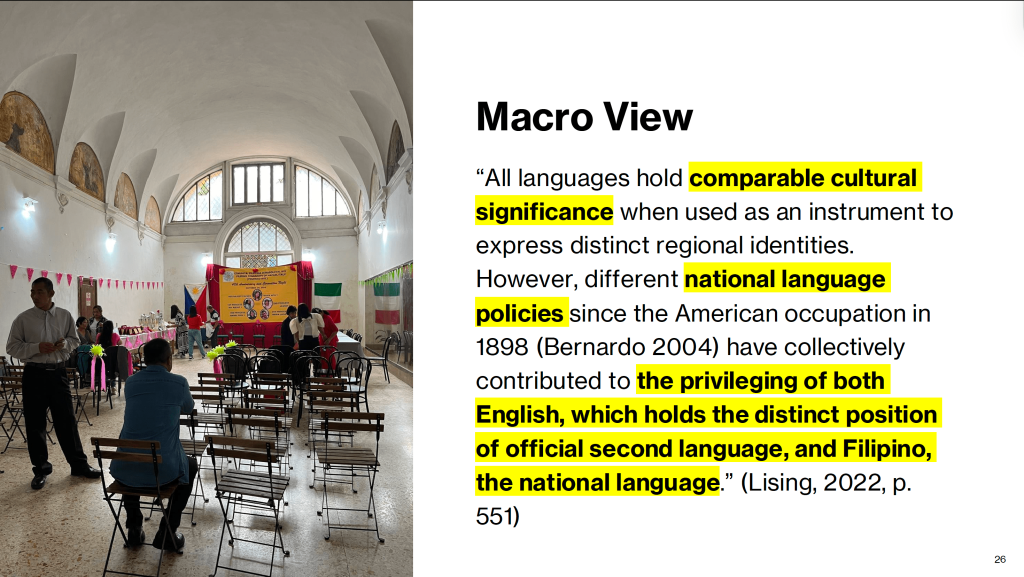
Asst. Prof. Or further pondered the factors and ideologies that influence the linguistic practices of Filipinos in Italy from both the macro and micro views. Drawing parallelisms between the two countries, she observed how globalization and postcolonial situations; language policies in the controlling domains; and the stigmatization of local languages in favor of official languages all take part in dictating language preferences. She cited a statement by sociolinguist Loy Lising which describes the situation of Filipino migrants in Australia yet also applies to that of Filipino migrants in other parts of the world:
Likewise, aside from the parents’ language proficiency, individual histories and social networks, as well as individual personalities and aspirations, need to be factored into the discourse. Or admitted that complicated family histories narrated during the interviews constantly prompt her to rethink categories (e.g., whether one counts as a G2 or actually a G1.5) and ask more questions.
For instance, deliberating whether there is an emerging Tagalog variety in Italy first requires an interrogation of the suitability of the term “heritage language” (Montrul, 2023; Cho, Cho, & Tse, 1997; Baker & Jones, 1998). Questions also arise regarding the framing of the phenomenon being documented. Considering the nature of data she has gathered thus far, Asst. Prof. Or wondered: “Am I looking at an emerging variety of Tagalog? Should I frame it as code-switching? Or should I frame it as translanguaging?” Following what Matras (2025) calls “process dynamism,” she also contemplated an alternative view of the entire setup, one that involves “a fluid, dynamic calculation [of] signs and symbols from [one’s] linguistic repertoire” used for distinct situations.

To end, Asst. Prof. Or emphasized why all these matter. The study brings to the forefront several issues related to language maintenance, including the notions of language endangerment in the home country and language attrition in a diasporic community. It also contributes to theorizing language contact and change, and to promoting recognition of and respect for diversity and linguistic rights as it highlights the migrants’ situation. Ultimately, it takes into account the community’s wellbeing, acknowledging how language plays a significant part in sustaining relationships between parents and children. (The latest updates on Asst. Prof. Or’s study can be read in this report.)
During the open forum, attendees further inquired regarding the composition of the migrant workers’ families, the effects of contact on code-switching, and the unique characteristics of this diasporic community in Italy.

Follow our social media pages and the official Department Youtube Channel for the release of the recording of the back-to-back PILLS. The next installment of PILLS 2025, held on September, focused on an affix-based subcategorization of Cebuano verbs and was delivered by Asst. Prof. Divine Angeli P. Endriga. Stay tuned for the release of the article and recording of the 9th PILLS installment!
Published by Patricia Anne Y. Asuncion