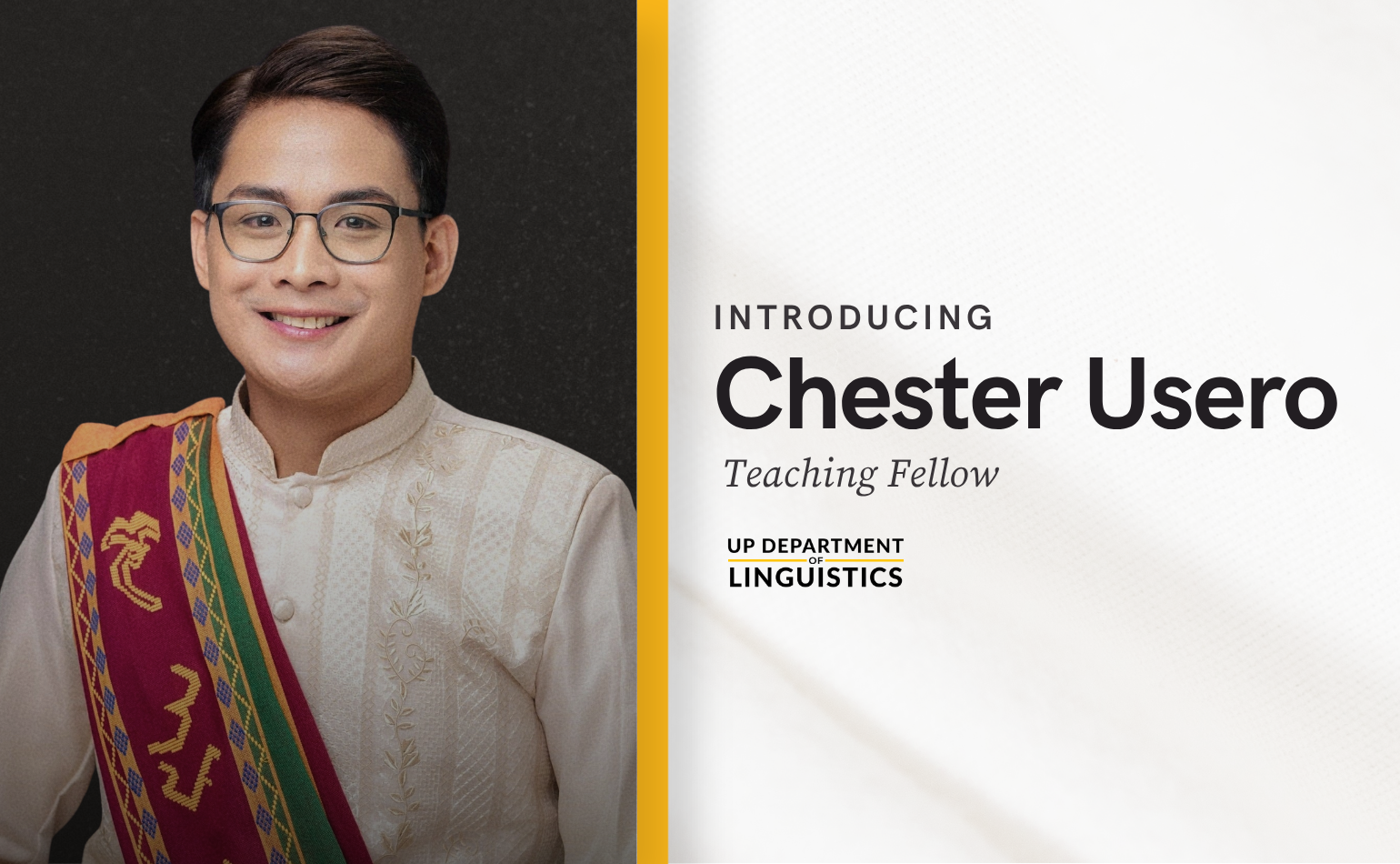
PhD in Lingg student Chester Usero is the Department of Linguistics’ first Teaching Fellow (TF). Usero currently handles a section of Linguistics 110 (Introduction to Linguistics), and assists in several graduate classes under the supervision of Prof. Aldrin P. Lee (Usero’s faculty-in-charge) and Asst. Prof. Kritsana Canilao. Read on to learn more about our TF!
What got you into Linguistics?
My interest in Linguistics grew from my fascination with language and the many ways people use it to make sense of their experiences and the world around them. Coming from Catanduanes, I grew up speaking Northern Catanduanes Bikol and became familiar with the ways people from different parts of the province spoke. Even before I knew there was a field called Linguistics, I was already noticing differences in words, sounds, and ways of speaking.
I first encountered Linguistics more formally as an undergraduate majoring in English Education. A special shout-out to my dear professors, Dr. Aida Dianela and Dr. Vicky Gianan, who made me fall in love with the field! 🫶🏼 Their classes helped me see that language was not just something we used every day, but something we could study systematically. I became fascinated by how sounds, words, sentence patterns, and meanings work, as well as by the differences between varieties of a language.
That interest eventually led me to the study of Philippine languages, particularly the documentation and description of languages and varieties that have received relatively little linguistic attention. Much of my work since then has been shaped by my interest in the languages and communities I know best, especially those in my home province.
Can you tell us more about your background?
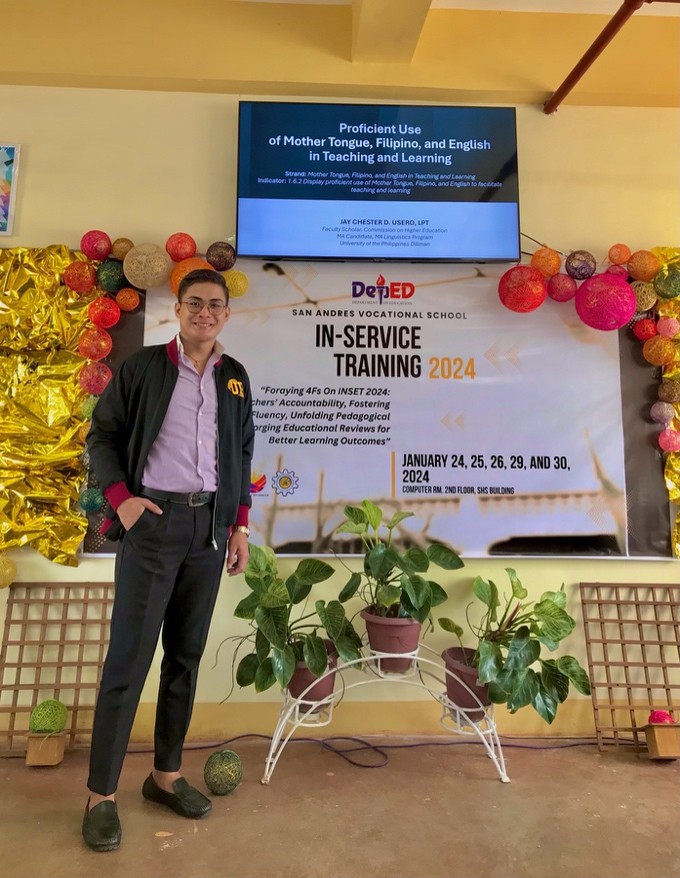
Before joining the Department as a teaching fellow, I taught at the Polytechnic \University of the Philippines–Manila as an Assistant Professorial Lecturer III in the Department of English, Foreign Languages, and Linguistics.
I earned my bachelor’s degree in Education, major in English, from Catanduanes State University and my MA in Linguistics from UP Diliman. My research interests include documentary and descriptive linguistics, Bikol linguistics, dialectology and sociolinguistics, and Philippine lexicography.
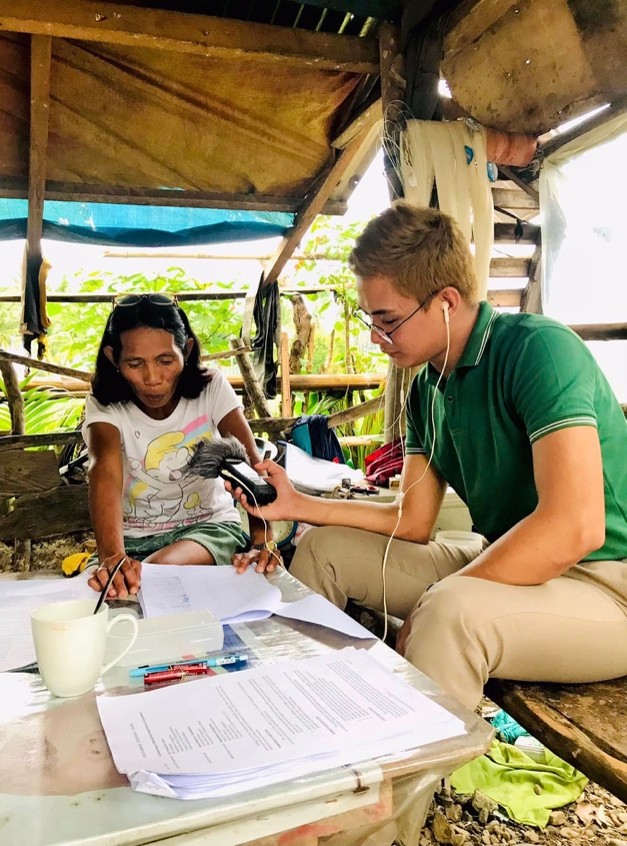
Much of my academic work has brought me back to Philippine languages, particularly the languages and varieties of the Bicol Region. My MA research focused on the dialectology of Catanduanes, which allowed me to work with speakers from different communities across the province and to look more closely at how language varies from one place to another.
I have also been involved in language documentation and orthography development initiatives for Indigenous Peoples’ languages in Regions I and II, in partnership with SIL Philippines and the Department of Education. These experiences have shown me how linguistic research can contribute not only to our understanding of languages but also to efforts to document and support the communities that speak them.
What is something that you look forward to in teaching Linguistics to undergraduate students?
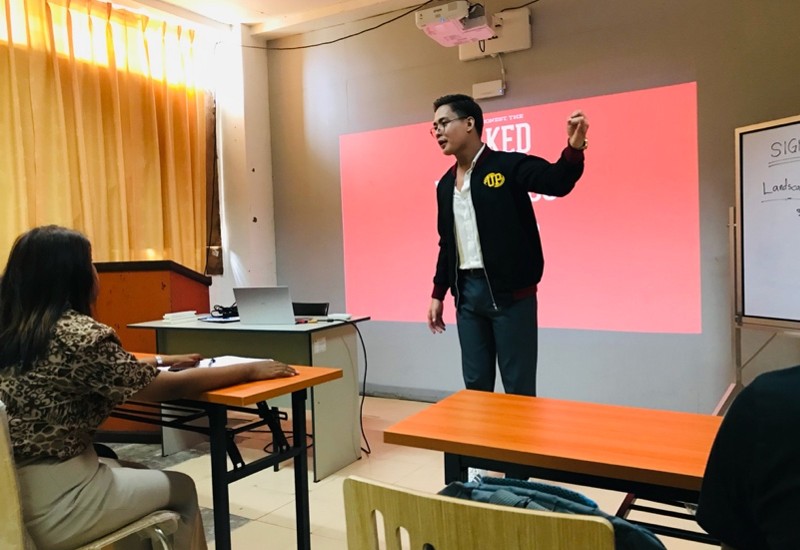
I look forward to seeing students discover that Linguistics is very much about the language they use every day. Many of us use language without thinking very much about how remarkable it actually is. One of the things I enjoy most about teaching introductory Linguistics is helping students look at familiar aspects of language in a new way, whether it is the sounds they produce, the words they use, the way they form sentences, or the way language varies across people and communities.
I also hope that my students become curious about their own languages. In a country as linguistically diverse as the Philippines, our classrooms are filled with opportunities to ask interesting questions about language. A student might come into class thinking that Linguistics is simply about learning technical terms, but I hope they leave with a greater appreciation for the languages they speak and hear every day.
For me, teaching is especially rewarding when students begin asking questions of their own. I hope to create a classroom where they feel encouraged to explore those questions and discover just how much there is to learn about language.
What are your ongoing projects or future research plans?
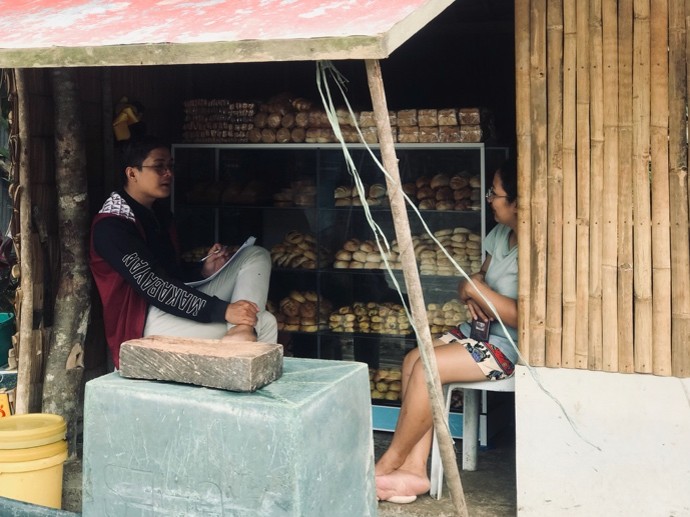
My current research focuses on the documentation and description of Philippine languages, particularly Bikol varieties. For my PhD research, I am working toward a grammar of Northern Catanduanes Bikol, with particular attention to grammatical variation across the varieties spoken in Catanduanes. This builds naturally on my earlier work on the dialectology of the province.
I am also interested in Philippine lexicography and in developing linguistic resources that can contribute to the documentation and preservation of Philippine languages. One project I am currently working on is a metalexicographic analysis of Bikol discourse particles. I find these small words particularly interesting because, although they can be easy to overlook, they often carry important meanings and functions in everyday interaction.
In the longer term, I hope to continue working with language communities and partner institutions on documentation, description, and orthography development, particularly for Indigenous Peoples’ languages. I hope my research will contribute not only to linguistic scholarship but also to resources that communities and educators can put to practical use.
Finally, what is something that you enjoy during your leisure time?
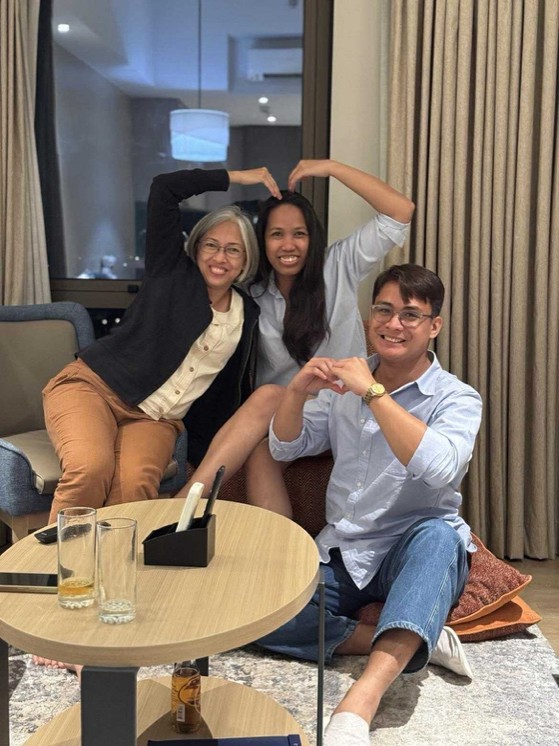
Outside the university, I enjoy rather simple things. I like playing table tennis, spending time in cafés and libraries, visiting museums, and taking walks around sunset. I also enjoy people-watching, which I suppose is an occupational hazard of being a linguist! Haha!
I also serve as a lector and commentator in my parish, which is another part of my life that I value. I enjoy having long conversations with friends, too, especially the kind where we get to talk about life, sort through our thoughts and feelings, and hopefully leave feeling a little lighter. Hahaha!
I suppose these are some of the things that keep me grounded outside academic life. They remind me that there is more to life than work, and that some of the most meaningful moments come from simply being present and enjoying life as it unfolds.
Published by Chester Usero